
Introduction
The last decade or so has witnessed a boom in online food delivery in India, with Swiggy emerging as one of the biggest players. As consumers increasingly opt for convenience and variety, food ordering platforms have transformed from service providers to data-rich ecosystems. Every search term, menu listing, price update, and delivery time presents possibly valuable information in customer-side demand, competitor strategies, and market dynamics.
For restaurants, cloud kitchens, and FMCGs, sustaining on Swiggy requires keeping tabs on pricing trends, offers, delivery times, and menu variations all the time. Doing it manually is slower, time and resource-consuming, and quite impossible on a large scale. Enter Swiggy data scraping!
Scraping Swiggy data allows businesses to extract and analyze structured information such as:
- Menu items and categories
- Pricing and discount strategies
- Delivery charges and surge pricing
- Customer reviews and ratings
- Regional availability and demand shifts
This blog looks into Swiggy data scraping and how it can achieve competitive pricing and menu intelligence. We shall illuminate the key benefits along with best practices to avoid common pitfalls. By the end of this article, you shall be convinced that outsourcing to experts could enable business entities to achieve deeper insights with no technical headaches.
Why Competitive Pricing Matters on Swiggy
Pricing proudly stands as a mighty lever influencing a customer’s decision on Swiggy. When listed side by side with hundreds of restaurants from the area, ₹10 is reason enough for a menu price variation, which can potentially keep a customer from choosing another outlet.
Factors that make competitive pricing essential include:
- Changing tastes in people – they keep on weighing offers from more than one restaurant before they place the order.
- Density of competition is high – metropolitan areas mean that there could be scores of options for one specific cuisine.
- Discounts coming from the platform-Swiggy keep on coming with promotions, coupons, and cashbacks that change the price perception.
Scraping Swiggy data helps businesses monitor these changes in real time, ensuring they never fall behind in pricing wars.
Why Menu Intelligence is Critical
Like pricing, the menu design, structure, and innovation are all important parameters in the food service business. A well-set menu draws more eyeballs, adds cart value, and gives an impression of high quality.
Menu intelligence from Swiggy includes insights such as:
- Popular dishes and their pricing across competitors.
- Seasonal menu trends (e.g., festive specials, summer beverages).
- Regional variations (Paneer Butter Masala priced differently in Delhi vs. Bangalore).
- Combo meals and bundling strategies.
- Use of high-margin add-ons like beverages and desserts.
With scraping, businesses can track competitors’ menus at scale and continuously optimize their own offerings.
Key Data Points You Can Scrape from Swiggy
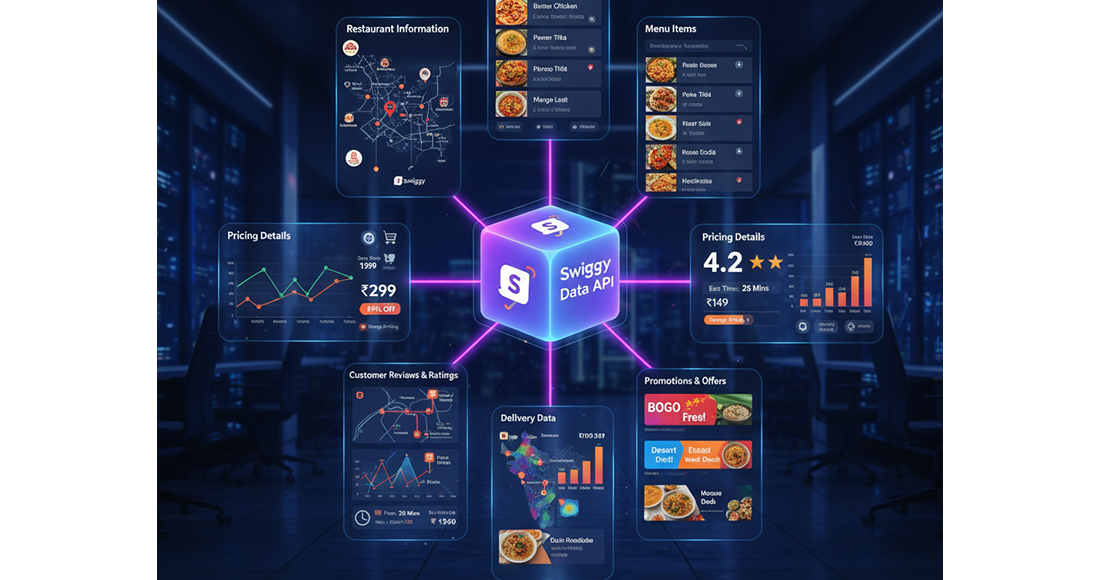
When scraping Swiggy for competitive intelligence, businesses often focus on extracting these data points:
1. Restaurant Information
Name, location, cuisine type, delivery area coverage.
2. Menu Items
Dish names, descriptions, categories, and availability.
3. Pricing Details
Base price, discounts, taxes, and surge pricing.
4. Delivery Data
Minimum order value, delivery charges, estimated times, and surge hours.
5. Customer Reviews & Ratings
Star ratings, number of reviews, sentiment trends.
6. Promotions & Offers
Platform-driven deals, restaurant-level discounts, cashback offers.
4 Regional Demand Insights
Dishes trending in specific cities or neighborhoods.
Collecting this structured dataset enables actionable insights for pricing models, menu innovation, and customer acquisition strategies.
Use Cases of Scraping Swiggy Data
1. Competitive Pricing Benchmarking
In order to keep your prices in the competitive realm, see how rival restaurants price similar dishes.
2. Demand Forecasting
Analyze trends in dishes and customer reviews to forecast demand spikes (such as festive sweets during Diwali).
3. Menu Optimization
Identify popular items missing from your menu or underperforming dishes that need replacement.
4. Regional Insights
Customize your menus and price structure to suit local palates; for example, “Hyderabad” may demand spicier fare, while “Pune” treats it just a bit more mild.
5. Marketing Campaign Design
Scrape promotions from competitors to design equally attractive or better campaigns.
6. Delivery Performance Benchmarking
Compare delivery charges and estimated times to ensure you remain competitive on service quality.
Benefits of Scraping Swiggy Data
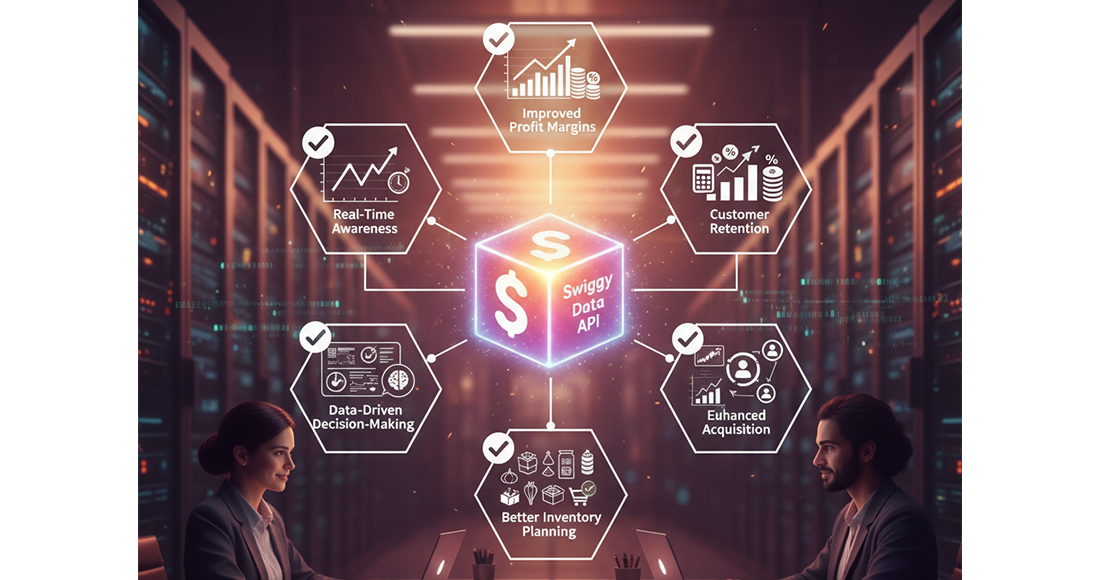
Real-Time Market Awareness
Food trends shift rapidly. Scraping allows you to stay updated on real-time competitor actions.
Improved Profit Margins
By optimizing pricing and menu items, you can maximize revenue while keeping costs in check.
Data-Driven Decision-Making
Replace gut instincts with actionable insights derived from structured datasets.
Customer Retention
Offering the right dish at the right price ensures higher loyalty and repeat orders.
Better Inventory Planning
By knowing what dishes are trending, you can manage raw material procurement efficiently.
Challenges in Scraping Swiggy Data
When scraping, Swiggy becomes potent, and challenges arise for companies:
- Website Structure Changes: Frequent updates can disrupt scrapers.
- Anti-Scraping Measures: CAPTCHA, rate limiting, and IP blocking may hamper extraction.
- Data Quality Issues: Raw scraped data might have duplicates or far-from-consistent data.
- Legal and Ethical Concerns: One must observe privacy and compliance with the data that is collected and used.
- Scalability: Collecting data from thousands of restaurants across multiple cities requires a strong setup.
Best Practices for Swiggy Data Scraping
Define Your Scope Clearly
You need to specify data requirements clearly, i.e., menu, prices, reviews, or delivery charges.
Ensure Data Accuracy
Use validation procedures to weed out duplicates and error-filled data.
Respect Compliance Boundaries
Practice ethical scraping methods that respect Swiggy’s policies and regional data protection laws.
Automate Regular Updates
Set up scraping in accordance with your business needs, be it daily, weekly, or real-time.
Invest in Data Cleaning
The following cleaning should be applied: Standardize naming conventions, remove inconsistencies, and structure data for easy analytics.
Monitor Scraper Performance
Keeping your scraping scripts up to date is important to tackle any changes in Swiggy’s site structure.
Leverage APIs Where Possible
Use these APIs to follow your internal processes with the downloaded data.
Outsourcing vs. Building In-House
Some businesses consider building in-house scraping teams, but this often comes with:
- High infrastructure costs.
- Skilled developer requirements.
- Constant maintenance overhead.
Can be set to external specialized providers to overcome such hurdles. Vendors provide expertise, scalability, and compliance knowledge so the food businesses concentrate on their strategy rather than worrying about technicalities.
Future of Data-Driven Food Delivery
Food delivery, by the year 2030, will probably be AI and data-heavy.
Menu personalization, dynamic pricing, and inventory management would all be carried out through web scraping and data analytics.
For restaurants and FMCG brands, staying ahead of the game means investing in real-time insights now. The aim of Swiggy data scraping is not merely competitor monitoring but carving out a unique space in the crowded market.
Conclusion: Why Food Data Scraping is the Right Partner
The potential of Swiggy data for competitive price monitoring and menu intelligence really comes into play only when it is done correctly. Scalability, compliance, accuracy, and ongoing maintenance are issues faced throughout the process. Companies that try doing it on their own more often than not run into breakage or delays, or get inaccurate datasets.
Hence, it is important to partner with a reliable data scraping provider. Food Data Scraping specializes in the realm of food industry web data scraping, providing:
- Heavy infrastructure for large-scale extractions.
- Compliance frameworks that respect data privacy laws.
- Scaleable solutions for business growth.
- End-to-end from scraping and cleaning to structured delivery.
Food Data Scraping can safely help you convert the large dataset of Swiggy into pricing and menu intelligence that will give your business an edge in one of the most competitive industries in India.