
Introduction
In this fast-paced era, data becomes the most expensive commodity in the economy. A large part of every decision taken in the food delivery and restaurant space comes from data, including pricing and menu optimization, as well as customer reviews and home delivery times. One of such platforms is Deliveroo, another modern technique that will totally make one’s food-delivery life different. Deliveroo transcends Europe, Asia, and the Middle East, with customers receiving—they claim—millions of daily customers in restaurants and cloud kitchens.
For establishments in the food sector, such as brands in the FMCG industry, for people who analyze data, and especially for investors, Deliveroo is defined as more than only a delivery app-it is an area of data abundance.
They can deduce more insights on what quality is required for achieving growth strategies by just ripping off all structured data sources like menus, prices, ratings, and reviews.
And the most convenient means to access this data is through the Deliveroo API. With the help of an API or custom-designed web scraping systems, businesses could achieve the automation of purchasing data to save time and receive live competitive intelligence data points.
In this blog, we’ll explore:
- Why Deliveroo data is essential.
- What the Deliveroo API offers.
- How to extract and analyze restaurant data.
- Key use cases for businesses.
- Benefits, challenges, and best practices.
- Why Food Data Scraping is the foundation of smarter decisions in the restaurant economy.
Why Deliveroo Data Matters
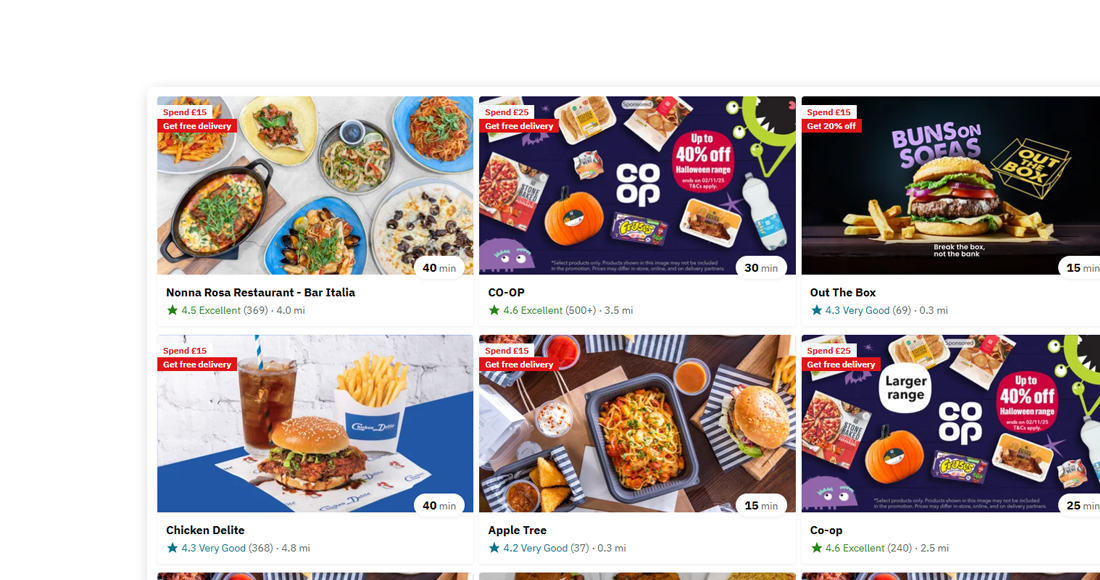
Deliveroo’s success lies in its ability to aggregate and present diverse food choices while offering seamless delivery experiences. For businesses, the platform provides visibility into:
- Restaurants List – Where do opponents feature, and how are they put out?
- Priced Menu – What’s the current price of an item in real time, or what kind of discounts and offers are there.
- Review and Rating of Customers – There’s sentiment analysis for it, and continuous improvement.
- Delivery Information – Charges and peak hours; how long it generally takes for delivery to take place.
- Regional Trends – Different Versions for Regional Recipes of Cities or Areas.
This makes Deliveroo data critical for:
- Competitive benchmarking.
- Menu engineering.
- Location-based strategy.
- Consumer trend analysis.
What Is the Deliveroo API?
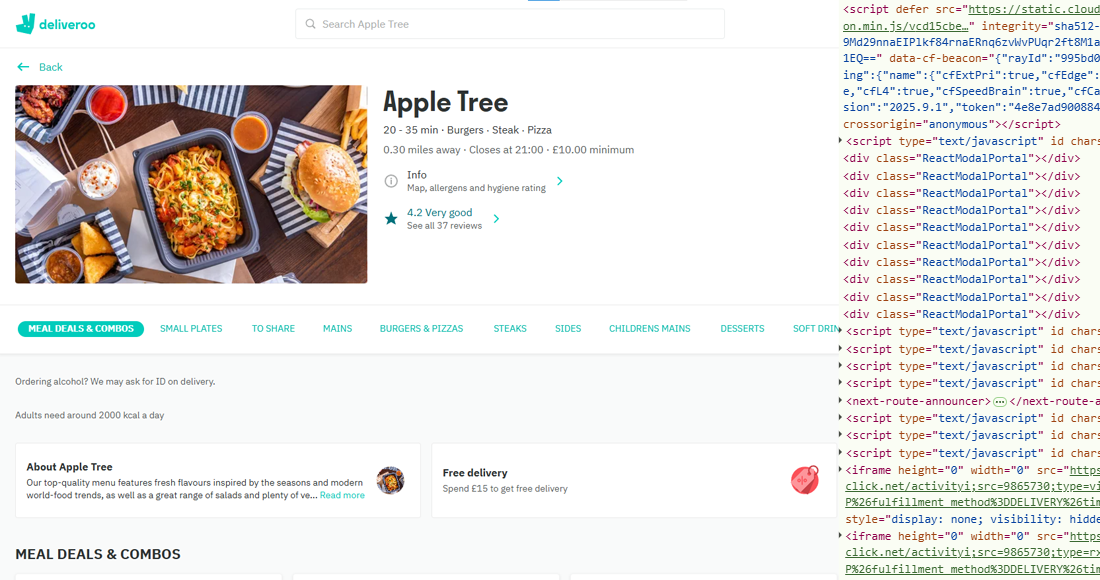
An API is considered a key that structures alongside having an excellent conversation between systems. What the Deliveroo API does is outline a medium through which developers and entrepreneurs can take data from the system, irrespective of manual browsing.
Key Data Available Through Deliveroo APIs & Scraping:
1. Restaurant Information
- Name, location, and cuisine type.
- Delivery radius and ratings.
2. Menus
- Dish names, categories, and descriptions.
- Add-ons, portion sizes, and prices.
3. Promotions
- Discounts, BOGO deals, seasonal offers.
4 . Customer Reviews
- Ratings and textual feedback.
- Keywords related to food quality, packaging, or delivery.
5. Delivery Insights
- Estimated delivery times.
- Surge or dynamic pricing signals.
How to Extract Data Using the Deliveroo API
Step 1: Get API Access
- Deliveroo may offer limited public or partner APIs.
- If direct API access is unavailable, businesses can use custom scraping solutions.
Step 2: Define Objectives
Decide what you need: menus, prices, reviews, or all of the above.
Step 3: Use Tools & Libraries
- For APIs: Postman, Python’s requests
- For Scraping: BeautifulSoup, Scrapy, or Selenium.
Example in Python (pseudo-code):
import requests
url = “https://api.deliveroo.com/v2/restaurants?location=London”
headers = {“Authorization”: “Bearer YOUR_API_KEY”}
response = requests.get(url, headers=headers)
data = response.json()
for restaurant in data[‘restaurants’]:
print(restaurant[‘name’], restaurant[‘cuisine’], restaurant[‘average_rating’])
Step 4: Store the Data
- Use databases like MySQL, PostgreSQL, or MongoDB.
- Cloud-based storage for large-scale data pipelines.
Step 5: Clean and Process
- Normalize menu categories.
- Remove duplicates.
- Standardize pricing data.
Step 6: Analyze
- Use dashboards (Tableau, Power BI).
- Perform sentiment analysis with NLP tools (spaCy, NLTK).
- Generate competitor benchmarks.
Use Cases of Deliveroo Data Extraction
1. Competitive Benchmarking
Restaurants can monitor competitor menus, pricing, and reviews to refine strategies.
2. Menu Optimization
Identify which dishes sell well in certain areas and adapt offerings accordingly.
3. Customer Experience Improvement
Reviews highlight pain points like late deliveries or poor packaging.
4. Dynamic Pricing Strategies
Scraped competitor data helps businesses stay price-competitive.
5. Expansion Planning
Analyze regional trends to choose new locations.
6. FMCG Brand Monitoring
Track packaged products listed on Deliveroo to assess brand visibility.
Benefits of Deliveroo API Data Extraction
- Real-Time Market Intelligence
Stay updated with competitor moves instantly. - Data-Driven Decisions
Replace guesswork with evidence-based strategies. - Scalability
Extract data across thousands of restaurants and regions. - Efficiency
Save time compared to manual research. - Customization
Focus on the exact data points relevant to your business.
Challenges in Deliveroo Data Scraping
- Request Counting Limits: There is a certain number of requests that you are able to make within a whole day.
- Anti-Scraping Measures: Prevention of Unauthorized Data Collection by the Use of CAPTCHA, Bot Detection, and IP Blocks.
- Changing Menus: Offers continuous editing while menus change consistently.
- Data Cleaning: It requires normalizing output data from raw services provided by such monitoring services so that data can be accurately compared.
- Legal Requirements Compliance: Scraping must have permission from service agreements and privacy laws.
Best Practices for Deliveroo Data Extraction
- Define Scope Clearly
Avoid scraping unnecessary fields. - Automate Updates
Schedule scraping at regular intervals. - Normalize Data
Standardize naming conventions and units. - Respect Platform Rules
Stay compliant with Deliveroo’s policies. - Use Proxies & Rotating IPs
Avoid detection and ensure smoother scraping. - Integrate with Analytics Tools
Make insights actionable through BI platforms. - Leverage Professional Vendors
Partner with food data scraping experts for large-scale projects.
The Future of Deliveroo Data Intelligence
By 2025, data extraction from platforms like Deliveroo will merge with AI-driven analytics:
- Predictive Demand Analysis: Forecast order spikes during weekends or festivals.
- Dynamic Menu Adjustments: Restaurants will adapt menus in real time.
- Hyperlocal Personalization: Customized recommendations by neighborhood.
- AI-Powered Promotions: Automated discount strategies based on competitor moves.
Deliveroo data will not just inform decisions—it will enable predictive, proactive business strategies.
Scaling Businesses with Deliveroo Data
For single restaurants, scraping data helps maintain competitiveness. For multi-location chains, it ensures consistency across markets. For FMCG brands, it provides SKU visibility across cities. And for analysts or investors, it reveals macro-level consumption patterns.
Deliveroo data extraction is not limited to restaurants—it is a cross-industry growth driver.
Conclusion: Why Food Data Scraping Is Essential
As a result, it is apparent that Deliveroo is not just an ordinary food delivery platform; instead, it is like a dense ecosystem of different datasets that represent customer concerns, pricing tactics, and current market trends. The analytics of such kind of data gives a competitive edge to any business that uses it.
By leveraging the Deliveroo API and scraping solutions, companies can:
- Monitor competitors in real time.
- Optimize menus and pricing dynamically.
- Improve customer experiences.
- Expand strategically into new markets.
By using this improvement, there lies the Food Data Scraping, which means structuring the raw data obtained from the platform into actionable insights. To any restaurant, brand, or analyst, Food Data Scraping does not become just a technical tool; but it can lay the foundation of growth and innovation in the modern food delivery economy.