

Introduction
Food pricing had always been the big-difficult juggling act between supply and demand, consumer preferences, and competition, even in the past. Nevertheless, pricing strategies are not solely governed by history and intuition in this Information Age. However, food pricing strategies have been redefined. Digital developments drive the industry towards the future, enabling online grocery platforms, food delivery apps, and e-commerce marketplaces to gain access to real-time price data at scale.
Given this information, manual monitoring on multiple platforms is logically impossible. This is where web scraping for food prices comes in handy. Web scraping for structured data collection from digital platforms signifies that stakeholders-Retailers, restaurants, suppliers, and analysts-enjoy quick visibility into the market dynamics because this is done fast and effectively.
This blog will explore how web scraping for food prices is transforming the supply chain, grocery operations, and restaurant insights. We’ll look at the benefits, use cases, challenges, and best practices—ultimately showing why Food Data Scraping is the foundation for future-ready decision-making.
Why Food Price Data Matters More Than Ever
The food industry is one of the most competitive and erratic in the whole world. Volatile daily prices because:
- Seasonal supply variations (e.g., tomatoes spike in summer).
- Geographic demand differences (e.g., seafood consumption in coastal vs. inland cities).
- Competitive promotions on grocery and delivery apps.
- Economic conditions like inflation or taxation.
- Consumer behavior shifts toward healthier or organic products.
For businesses, food price monitoring is not just about tracking numbers—it’s about strategic intelligence. Accurate price insights can help businesses:
- Improve margins.
- Retain customers.
- Optimize supply chains.
- Respond quickly to competitor moves.
What Is Web Scraping for Food Prices?
Web scraping involves an automated mechanism to draw out data from websites on digital platforms. Data monitoring is allowed in many businesses when it comes to the food industry.
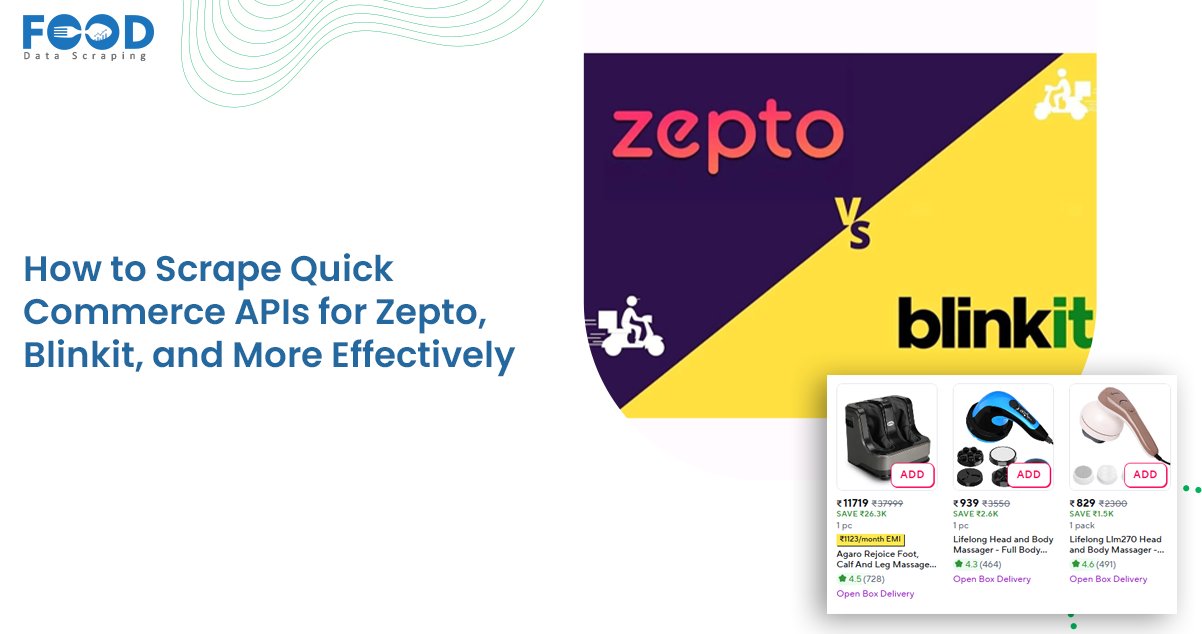
- Grocery prices across apps like Zepto, Blinkit, Instamart, and BigBasket.
- Restaurant menu prices on platforms like Zomato, Swiggy, Talabat, and Deliveroo.
- Wholesale and supply chain costs from distributor portals.
- Promotions, discounts, and seasonal campaigns.
Instead of relying on limited market reports, web scraping offers live, structured, and scalable price intelligence.
Data Points Extracted Through Food Price Scraping
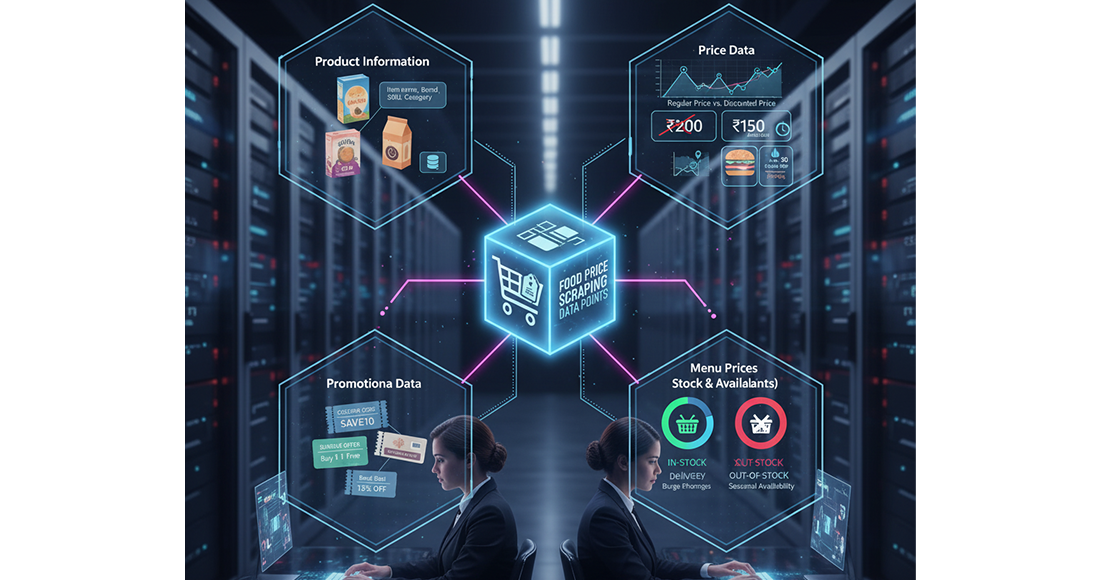
1. Product Information
- Item name, brand, SKU, category.
2. Price Data
- Regular price vs. discounted price.
- Flash sale and time-sensitive offers.
- Regional price differences.
3. Menu Prices (Restaurants)
- Dish name, portion size, add-ons.
- Delivery charges and surge pricing.
4. Promotional Data
- Coupon codes, bundle offers, bank deals.
5. Stock & Availability
- In-stock vs. out-of-stock signals.
- Seasonal availability.
Web Scraping in the Food Supply Chain
1. Supplier Benchmarking
Scraping wholesale portals enables food businesses to compare supplier prices in real time.
2. Demand Forecasting
Historical price data combined with scraped trends helps predict demand surges (e.g., dry fruits during Diwali).
3. Efficient Inventory Management
Tracking stock availability on different suppliers to avoid a failure.
3. Region-Based Sourcing
Identify low-cost sources of different commodities in different geographies, like rice, wheat, or vegetables.
Web Scraping in the Grocery Industry
1. Competitive Price Monitoring
Platforms like Zepto, Blinkit, and Instamart adjust prices frequently. Scraping ensures real-time benchmarking.
2. Promotion Benchmarking
Track seasonal discounts and design better promotional campaigns.
3. Category Insights
Discover high-demand products in categories like organic, gluten-free, or plant-based.
4. Regional Pricing Strategies
Adapt pricing to specific PIN codes or neighborhoods based on competitor moves.
5. Consumer Insights
By analyzing price changes, businesses can track demand elasticity and willingness to pay.
Web Scraping in the Restaurant Industry
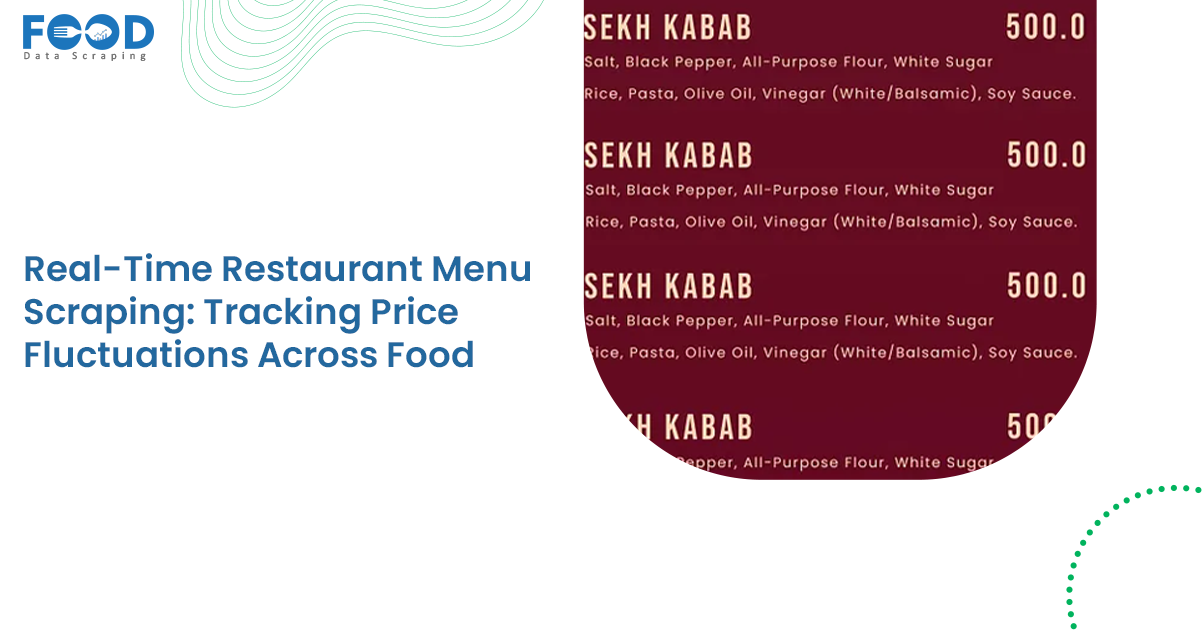
1. Menu Price Benchmarking
Compare dish-level pricing across restaurants in the same delivery radius.
2. Competitor Promotions
Identify offers like “Buy One Get One Free” or festival discounts.
3. Regional Menu Variations
Scrape data to understand how menus differ by city or locality.
4. Delivery Fee Monitoring
Track competitor delivery fees, which often influence customer decisions more than menu prices.
5. Customer Sentiment (Linked to Price)
Scrape reviews mentioning affordability or overpricing for actionable insights.
Benefits of Food Price Scraping
- Real-Time Intelligence
Get instant visibility into competitor and market prices. - Improved Margins
Avoid underpricing or over-discounting. - Customer Retention
Maintain fair and competitive pricing. - Regional Customization
Adapt to hyperlocal demand and affordability. - Faster Innovation
Spot emerging trends like premiumization or budget-friendly combos. - Strategic Expansion
Plan new outlets or product launches based on pricing gaps.
Challenges in Food Price Scraping
- Dynamic Websites: Frequent updates to apps and sites break scrapers.
- Anti-Scraping Strategies: CAPTCHAs, IP bans, and rate-limiting.
- Data Quality Requirements: Standardization of product titles, measurement units, and categories.
- Scale: Handling millions of entries needs a strong backbone in infrastructure.
- Compliance turned crucial: Compliance is absolute because norms of ethical and legal handling call for it.
Best Practices for Food Price Scraping
- Define Clear Goals
Focus on price monitoring, promotions, or inventory insights. - Automate Updates
Schedule scraping daily, hourly, or in real time. - Normalize Data
Standardize units (kg, g, L) and currency formats. - Leverage Analytics Tools
Use BI dashboards for visualization and decision-making. - Stay Compliant
Respect terms of service and data laws. - Partner with Experts
Outsource to reliable scraping vendors for scalability.
The Future of Food Price Intelligence
The next wave of food price intelligence will combine AI and machine learning with scraping:
- The Pricing AI: Adjusts the prices of restaurants, grocery stores, and retail stores to reflect contemporary price movements that can be appreciated.
- Prediction Analysis: Predicts movements on account of seasonal movements or inflationary periods related to over- or under-shooting prices.
- Adaptive Promotion: Properly crafted personalized positioning strategies and other new elements are merely the beginning of continuously analyzing these.
- Supply Chain Automation: Establish integration protocols directly from data scraping methods to procurement systems.
After 2030, the landscape of price intelligence will shift greatly into systems that are fully automatic, a property driven by AI-gathered relevant data combined with predictive AI.
Scaling Businesses with Food Price Scraping
For single restaurants, price scraping ensures competitive menus. For grocery chains, it creates regional pricing strategies. For FMCG brands, it offers visibility into SKU performance across platforms. For investors and analysts, it reveals broader market dynamics.
At every scale, food price scraping turns raw listings into strategic intelligence.
Conclusion: The Power of Food Data Scraping
But not for guessing things, the food industry is actually heading towards a future of having real-time intelligence because it is data-driven: the supply chain will benefit from real-time food prices, even grocery delivery, and restaurant prices, but restaurant pricing as a potential profitability edge.
Web scraping for food prices enables:
- Real-time competitive monitoring.
- Smarter pricing and promotions.
- Supply chain optimization.
- Regional and category-specific strategies.
At the center of this transformation lies Food Data Scraping—the process of converting scattered, dynamic pricing data into actionable insights. For retailers, restaurants, and brands alike, food data scraping is not just a tool—it’s the foundation of sustainable growth in the digital-first economy.
Leave feedback about this