
Introduction
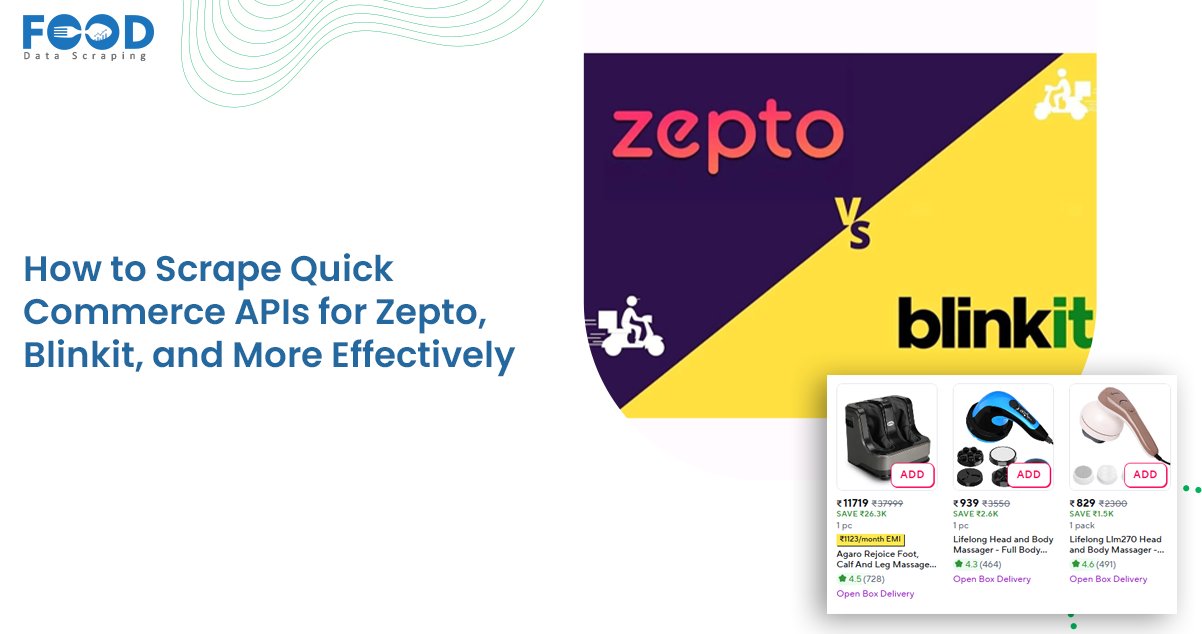
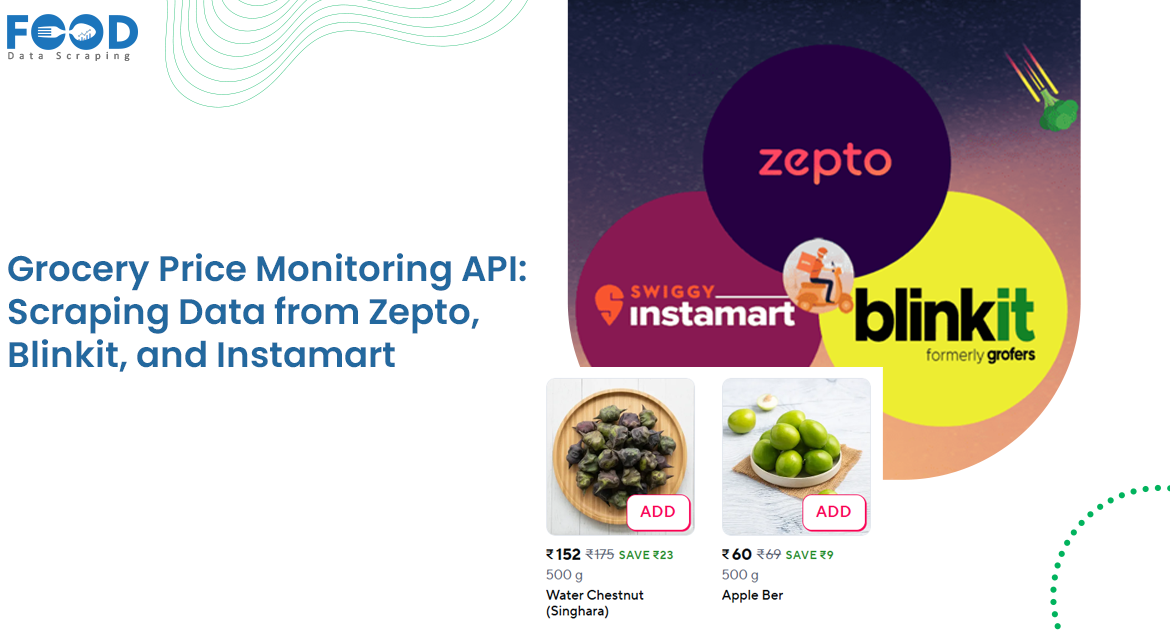
The biggest revamp in recent years has been in the area of online grocery sales. The luxury factor has now been converted into a habit of daily life for consumers. The likes of Zepto, Blinkit, and Swiggy Instamart hold the grip on rapid commerce, or “q-commerce,” in India, capitalizing on an extremely fast mode of delivery, luring discounts, and a plethora of products.
Not simply as a sales point, but it is a data gold mine for all businesses, actual or retailers, market researchers, grocery-tech-startups, FMCG brands, and various groups by providing pricing, offers, inventories, delivery charges, and user sentiments. All will be of paramount use in analyzing consumer behavior and market competition.
Well, we’re in luck, as grocery-related data on these platforms is very volatile. Prices keep changing time and again with every hour or so because of different demand, promotions, and/or geographical location factors. Manually tracking this data is a utopian environment. Thus, the vanishing possibility has increased businesses looking for a newer solution: Grocery Price Monitoring APIs-created tools that can scrape and standardize data in real time from platforms such as Zepto, etc., to Blinkit and Instamart.
In this blog, we’ll explore:
- Why grocery price monitoring is essential in 2025.
- How APIs scrape real-time data from q-commerce apps.
- What insights can businesses gain from monitoring prices?
- Use cases across industries.
- Benefits, challenges, and best practices.
- Why Food Data Scraping is at the core of modern grocery intelligence.
Why Grocery Price Monitoring Matters in 2025
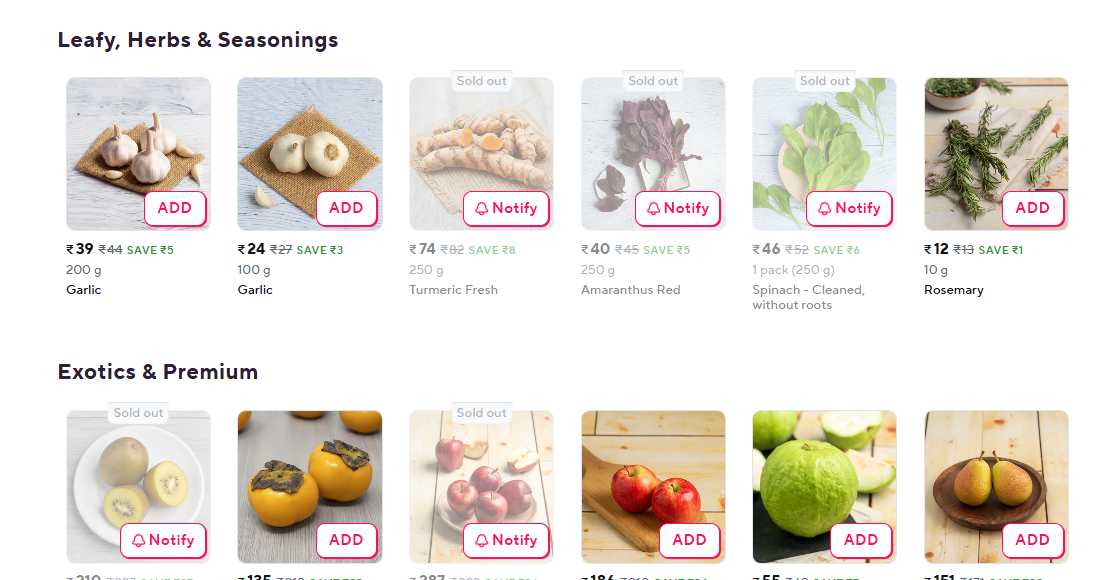
With the likes of Blinkit, Zepto, and Instamart leading the far, India’s q-commerce sector is seen to account for more than $10 billion in annual sales by 2025.
For businesses, grocery price monitoring helps to:
- Follow Competitors: Keep track of your competitors’ products and categories in real time.
- Know Market Trends: Get an understanding concerning seasonal and regional price differences.
- Optimization of Pricing: Avoid the wrong pricing items.
- Design Promotions: Make your campaigns in tandem with consumer demand and competitor offerings.
- Supply Chain Effectiveness: Adjust your purchasing tactics based on demand signals.
In short, without price monitoring, businesses risk losing market share, customer loyalty, and profitability.
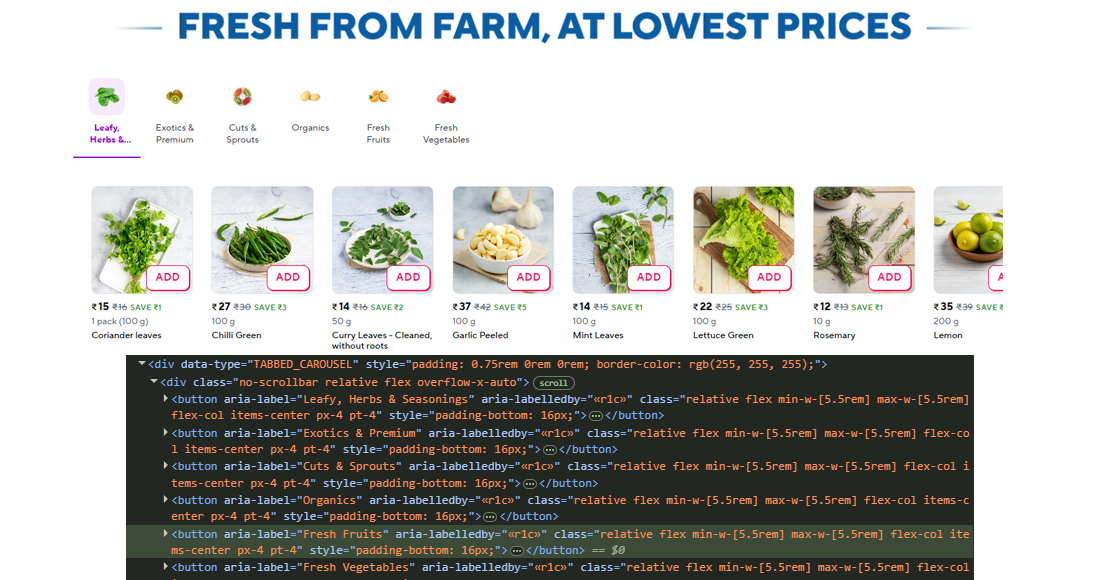
A Grocery Price Monitoring API is a tool that automates the collection of structured pricing and product data from grocery delivery apps and websites. Instead of manually checking prices on Zepto, Blinkit, or Instamart, businesses can use APIs to:
- Extract product listings, categories, and prices.
- Monitor discounts and offers in real time.
- Track inventory availability across regions.
- Integrate clean datasets into analytics systems.
These APIs act as bridges between raw platform data and actionable insights.
How a Grocery Price Monitoring API Works
Step 1: Define Scope
Businesses decide whether to monitor all products or specific categories (e.g., staples, beverages, personal care).
Step 2: Data Collection
The API fetches structured data points such as:
- Product name, SKU, and brand.
- MRP (Maximum Retail Price).
- Selling price.
- Discount percentage.
- Stock availability.
- Delivery charges.
Step 3: Normalization
Data from Zepto, Blinkit, and Instamart may appear in different formats. APIs standardize fields for consistency.
Step 4: Storage
Data is stored in databases (SQL, MongoDB, or cloud storage).
Step 5: Analysis
Clean datasets are analyzed through BI dashboards, predictive models, or pricing engines.
Data Points Scraped from Zepto, Blinkit, and Instamart
1. Product Listings
- SKU codes and product IDs.
- Category classification (fruits, dairy, snacks, beverages, etc.).
- Brand names.
2. Pricing Data
- MRP vs. selling price.
- Dynamic discounts.
- Flash sales and time-limited offers.
3. Inventory Data
- Stock levels (in-stock, low stock, out of stock).
- Regional variations in availability.
4. Promotions and Offers
- Cashback deals (bank or wallet-specific).
- Bundle offers and combo packs.
- Festival-specific campaigns.
5. Delivery Information
- Minimum order value.
- Delivery fees by PIN code.
- Estimated delivery time.
Why Monitor Prices on Zepto, Blinkit, and Instamart?
Each platform operates differently, making cross-platform monitoring critical.
- Zepto → Focus on speed (10-minute delivery), aggressive pricing for staples.
- Blinkit → Wide coverage, cashback-driven promotions.
- Instamart → Leverages Swiggy’s ecosystem with loyalty-based offers.
Monitoring all three ensures a 360-degree view of grocery competition.
Use Cases of Grocery Price Monitoring APIs
1. Retailers & Supermarkets
Benchmark pricing across platforms and adjust in-store/offline strategies.
2. FMCG Brands
Track how products are displayed and priced across Q-commerce apps.
3. Cloud Kitchens & Restaurants
Monitor ingredient costs (e.g., oil, rice, spices) to optimize menu pricing.
4. Market Researchers
Analyze consumption trends, promotional strategies, and seasonal behavior.
5. E-Commerce Startups
Use real-time grocery data to design new delivery or aggregator platforms.
6. Investors & Analysts
Evaluate pricing strategies and market potential for q-commerce growth.
Benefits of Grocery Price Monitoring APIs
- Real-Time Competitive Intelligence
Monitor pricing strategies as they evolve. - Smarter Promotions
Design offers that match or outperform competitor discounts. - Improved Margins
Balance competitiveness with profitability. - Faster Innovation
Spot rising categories (e.g., organic products) early. - Regional Customization
Adapt pricing to specific geographies. - Scalability
Track thousands of products across multiple cities seamlessly.
Challenges in Grocery Price Scraping
- Dynamic Updates: Dynamic changes often occur in value.
- Scrape protection: Block scraping, bot monitoring, and CAPTCHA.
- Data Standardization: Varying publication names across the networks.
- Regulatory and ethical compliance: Obey the terms of service and data protection laws.
- Infrastructure needs: Millions of records need back-end systems to serve as a strong handle.
Best Practices for Grocery Price Monitoring
- Define Objectives Clearly
Focus on priority categories or competitor products. - Automate Scraping
Schedule regular API calls (daily or hourly). - Standardize Formats
Normalize data for easy cross-platform comparison. - Ensure Compliance
Use ethical and legal scraping practices. - Use Proxies & Rotation
Prevent IP bans and ensure smooth operations. - Visualize Data
Use BI dashboards for real-time decision-making. - Leverage Vendors
Partner with specialized scraping providers for scalability.
Future of Grocery Price Monitoring
By 2025, grocery price monitoring will be driven by AI and predictive analytics:
- AI-Based Real-time Pricing Modulation: The system sets upper or lower price parameters for a product or service depending on fluctuations in competing prices- all this happens ‘real time.
- Prediction Models: Based on the needs and requirements during festivals or touch points, the inflation may predict a surge in demand.
- Personalizing the Promotions: Offers aimed directly at customer segments.
- Automated Procurement: Aligns supply chain with forecasts rather than responding to demand signals and price of data.
The fusion of APIs and AI will create next-gen pricing ecosystems.
Scaling Businesses with Grocery Price APIs
For startups, APIs offer a quick way to track competition. For large FMCG brands, APIs ensure consistent pricing strategies across markets. For investors, APIs reveal hidden demand patterns.
Across scales, grocery APIs convert raw price listings into growth intelligence.
Conclusion: The Role of Food Data Scraping
In the flourished market of q-commerce in India, pricing is the sharpest sword in competitiveness. Zepto, Blinkit, and Instamart are some of the platforms that will still be seen overlooking pricing and promotions very frequently.
A Grocery Price Monitoring API helps businesses:
- Scrape and standardize pricing data.
- Track competitor offers in real time.
- Optimize promotions and supply chains.
- Scale strategies across regions confidently.
At the core of this transformation lies Food Data Scraping—the technology that turns raw grocery data into actionable intelligence. For retailers, FMCG brands, and analysts, food data scraping isn’t just a tool—it’s the foundation of smarter grocery growth in 2025 and beyond.