

Introduction
The market for online food delivery is booming, and DoorDash is among the largest in the game. With millions of users, thousands of partner restaurants, and a growing presence across multiple countries, DoorDash has become more than a delivery service: it is an information powerhouse.
DoorDash becomes a data platform for any business, including restaurants, FMCG brands, cloud kitchens, or market research companies. Every menu item, every delivery charge, every customer review is a data point that stands to be analyzed. The downside: data is not neatly packaged for a business to consume.
This is where a DoorDash Food Delivery Data Scraping API gains importance. In order to derive competitive pricing insights, menu intelligence, customer sentiment data, and regional demand trends, businesses must unlock this structured information through automation from DoorDash.
This blog will dissect how one can exploit and scrape DoorDash data via APIs for growth; what sorts of insights exist; case studies and examples by industries; limitations one has to bear in mind; and why food data scraping has gained paramount importance, especially in the restaurant delivery economy of the Digital First world.
Why DoorDash Data Is So Valuable
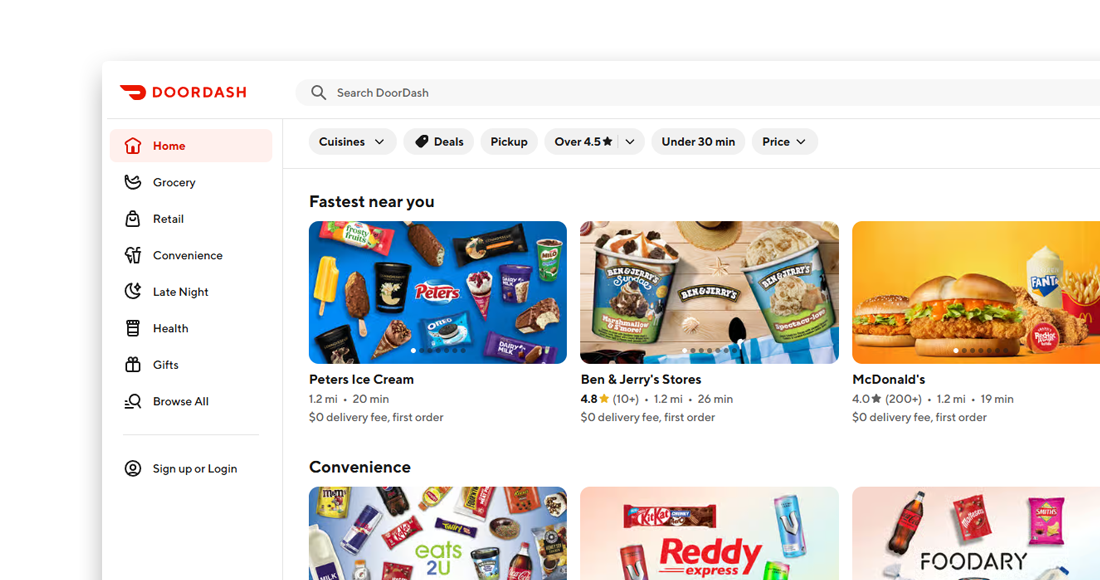
DoorDash is not a simple delivery platform; it is a real-time market for food consumption patterns. Customers search, browse, compare, and order from the thousands of restaurants online every single day. Hence, such a behavior produces a big pile of highly useful data.
Types of critical data available on DoorDash:
- Restaurant Listings: Name, location, cuisine type, service areas.
- Menus: Dish names, categories, descriptions, and add-ons.
- Pricing: Base prices, discounts, surge pricing, bundle deals.
- Delivery Metrics: Delivery charges, minimum order values, and estimated times.
- Reviews & Ratings: Customer sentiment, average ratings, keyword trends.
- Promotions: DoorDash-driven offers, seasonal discounts, and cashback.
- Regional Demand: What’s popular in one city vs. another.
For businesses, this data can answer fundamental questions like:
- How do my competitors price the same dish across different cities?
- What cuisines are trending in a specific neighborhood?
- Which promotions are driving the highest order volumes?
- What are customers complaining about most frequently?
Why APIs Are the Best Way to Scrape DoorDash Data
While web scraping is possible with scripts and crawling, these APIs offer faster, scalable, and highly reliable structured data access.
Key benefits of DoorDash Data Scraping API include the following:
- Automation at Scale: Collect data from thousands of restaurants in real time.
- Structured Output: Data delivered in JSON, CSV, or formats ready for analysis.
- Customizability: Choose the exact data fields needed (e.g., only prices and reviews).
- Integration: Directly feed scraped data into BI dashboards, CRM systems, or analytics pipelines.
- Efficiency: Avoid constant maintenance as is needed with manual scrapers that break when websites update.
In other words, such API-driven scraping is more sustainable and conducive to business when it comes to large-scale food delivery data scraping.
Use Cases: How Businesses Leverage DoorDash Scraping APIs
1. Competitive Pricing Intelligence
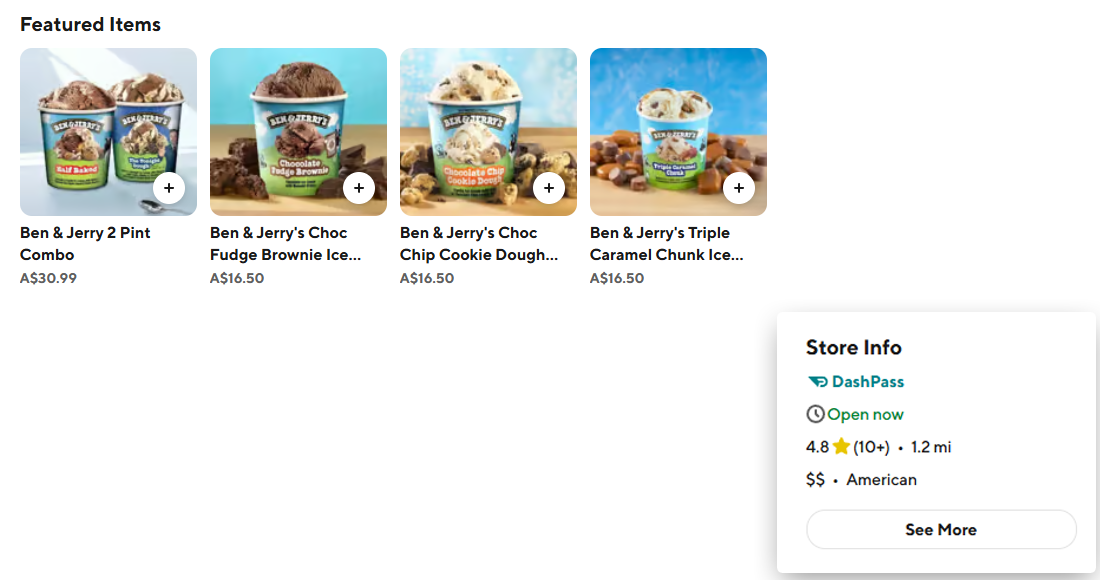
Restaurants can benchmark their prices against competitors in the same delivery zone. For example, if 10 nearby outlets sell “Chicken Wings” between $9–$12, a restaurant can set its price at $10.50 with a small promotional offer to attract buyers.
2. Menu Gap Analysis
Scraping menus reveals unmet demand opportunities. If vegan pizzas are trending in reviews but only a handful of outlets offer them, launching a vegan menu can capture market share.
3. Customer Sentiment Tracking
Scraping reviews gives deep insights into:
- What customers like (taste, packaging, delivery speed).
- What they dislike (portion sizes, late orders, pricing).
- How competitors are perceived in comparison.
4. Delivery Performance Optimization
Delivery fees and time-related data allows businesses to improve their logistics. If a competitor has free delivery within 5 miles, one has to match or better this offering.
5. Promotions & Campaign Benchmarking
Scraping promotions shows what offers drive traffic (e.g., “20% off first orders,” “BOGO deals”). Businesses can design smarter campaigns accordingly.
6. Regional Expansion Planning
DoorDash demand data by city or neighborhood helps brands decide where to launch next. If sushi orders are booming in Austin but underrepresented by restaurants, that’s a prime opportunity.
7. FMCG & CPG Insights
Packaged food brands must analyze how their SKUs perform on DoorDash versus those of competitors to assess distribution or Price and adjust accordingly.
Benefits of DoorDash Data Scraping for Business Growth
- Data-Driven Decision Making
Replace intuition with hard, real-time insights. - Increased Profit Margins
Optimize pricing and promotions to boost ROI. - Faster Innovation
Spot trends early and adapt menus or offerings before competitors. - Customer Retention
Refine service quality using feedback-driven improvements. - Market Expansion
Enter new locations with confidence based on demand analytics. - Operational Efficiency
Cut costs by streamlining delivery logistics and inventory planning.
Challenges in DoorDash Data Scraping
Scraping DoorDash data—whether via APIs or custom scrapers—comes with hurdles:
- Anti-Scraping Barriers: DoorDash may block high-frequency crawlers.
- Dynamic Site Structures: Updates in UI/UX can break scripts.
- Data Volume: Managing large datasets requires scalable infrastructure.
- Legal Considerations: Must respect terms of service and regional data laws.
- Data Cleaning: Raw data often includes inconsistencies that need structuring.
Best Practices for Scraping DoorDash Data
- Define Clear Objectives
Be specific: Are you benchmarking pricing, analyzing reviews, or planning expansion? - Focus on Data Accuracy
Validate scraped datasets to ensure reliability. - Automate Regular Updates
Scrape daily, weekly, or real-time depending on business needs. - Ensure Compliance
Follow ethical and legal frameworks for scraping. - Invest in Data Cleaning
Standardize formats and units for analytics compatibility. - Integrate with BI Tools
Feed data into dashboards (Power BI, Tableau) for actionable visualization. - Leverage Specialized Vendors
Partnering with scraping experts reduces time, cost, and risk.
The Future of DoorDash Data Intelligence
The future lies in AI + Data Scraping synergy. With machine learning models, businesses can:
- Predict emerging cuisine trends.
- Automate dynamic pricing based on competitor data.
- Personalize promotions at the customer level.
- Forecast inventory demand with precision.
DoorDash data scraping isn’t just about tracking competitors today—it’s about building predictive growth models for tomorrow.
Scaling Businesses with DoorDash Data
For small restaurants, scraping provides incremental improvements. For enterprise brands and multi-location chains, it’s transformative.
- Benchmark menus and pricing across thousands of outlets.
- Customize offerings city by city.
- Expand into new regions confidently.
- Build dynamic strategies powered by real-time insights.
This is why scraping APIs have become a strategic tool for scaling growth in the food delivery economy.
Conclusion: The Role of Food Data Scraping in Business Growth
Data represents the latest competitive advantage in the technology-first food delivery ecosystem. DoorDash, being one of the world’s largest delivery platforms, is a treasure trove of data that businesses can utilize for smarter strategies.
Pricing optimization, menu development, regional expansion, and client satisfaction-scraping DoorDash data via APIs turns growth from guesswork.
Food Data Scraping lies at the very core of this transformation, a potent engine for structuring delivery data into an intelligence framework. For restaurants, FMCG brands, and enterprises looking to make it big in a highly competitive ecosystem, food data scraping is not a matter of choice-it’s the future.
Leave feedback about this