

Introduction
Just over a couple of gaps, Q-commerce, or quick commerce, has completely altered how First-World people get groceries, household essentials, and even meals. It’s different from old e-commerce, which delivers on the days. The fast commerce platforms Zepto, Blinkit, Instamart, Getir, Glovo, and Gorillas deliver groceries, individual items, and a meal within 10 to 30 minutes. Their ultra-fast delivery model is an elegantly planned and data-driven way of micro-fulfillment on the back of real-time inventory updates.
According to them, the q-commerce concept places too much value on some of the more impressive innovations. However, all of them, whether you are an FMCG brand, a retailer, a restaurant, or an investor, also have access to something far more powerful than transactional benefits-everything they buy, sell, or produce on these platforms leaves a trail of data. There is absolutely no match here for what they can get from scraping such data from many q-commerce companies in different countries. Pricing of products, discounts, seasonal demands, dessert sales, everything, provides great insights into consumer behavior, competitive strategies, and global market opportunities.
This blog provides a comprehensive guide to scraping quick commerce data internationally. We’ll explore why it matters, what data can be extracted, how scraping is done, use cases across industries, challenges, best practices, and how Food Data Scraping lies at the core of actionable intelligence.
The Rise of Quick Commerce
On the expected margin of one trade, on the expected margin of a single trade, quick commerce metamorphosed from a niche experiment to a mainstream commercial channel. Quick commerce was estimated at over US$60 billion on a global scale by 2025; national borders such as India and the Middle East grew rapidly in the Latin American region.
Why Quick Commerce Matters Globally:
- Consumer Behavior: People increasingly prefer hyper-convenience.
- Market Differentiation: Platforms compete on delivery speed, pricing, and product assortment.
- Dynamic Pricing: Frequent price fluctuations driven by demand and supply.
- Promotions: Heavy discounting to capture customer loyalty.
Performing Quick Commerce Scraping worldwide permits businesses to observe pricing cross-border, also product trends as well as promotions.
What Data Can Be Scraped from Quick Commerce Platforms?

Quick commerce platforms, though different in branding and geography, present similar datasets.
Product Data
- Product names, SKUs, categories, and brands.
- Pack sizes and variations.
Pricing Data
- MRP (Maximum Retail Price) vs. selling price.
- Dynamic discounts, cashback offers, flash sales.
- Price changes based on time, region, or demand.
Inventory Data
- Stock levels: in-stock, low-stock, or out-of-stock.
- Seasonal availability.
- Regional variations in supply.
Delivery Insights
- Delivery fees by PIN code or neighborhood.
- Delivery time estimates.
- Surge pricing during peak demand.
Promotions and Campaigns
- Bundle offers (e.g., buy 2 get 1 free).
- Wallet-based cashback.
- Festival-specific discounts.
Scraping this data provides businesses with granular visibility into global quick commerce ecosystems.
Why Scrape Quick Commerce Data Across Countries?
1. Price Benchmarking
Global bonded FMCG brands will compare market pricing in varying scenariospecific products, such as Indian snack products vs. European beverage products.
2. Demand Forecasting
When drawing seasonal demand patterns in the different geographies’ cultures, examples are where such differences in the averages of chocolate sales across Europe, with their Diwali average in India.
3. Competitive Intelligence
Monitor platform-specific promotions and discounts to refine strategies.
4. Market Expansion
Evaluate which countries show growing demand for specific categories before entering.
5. Supply Chain Optimization
Align sourcing and inventory with cross-border demand signals.
Scraping quick commerce data transforms regional market analysis into global business intelligence.
How Quick Commerce Data Scraping Works
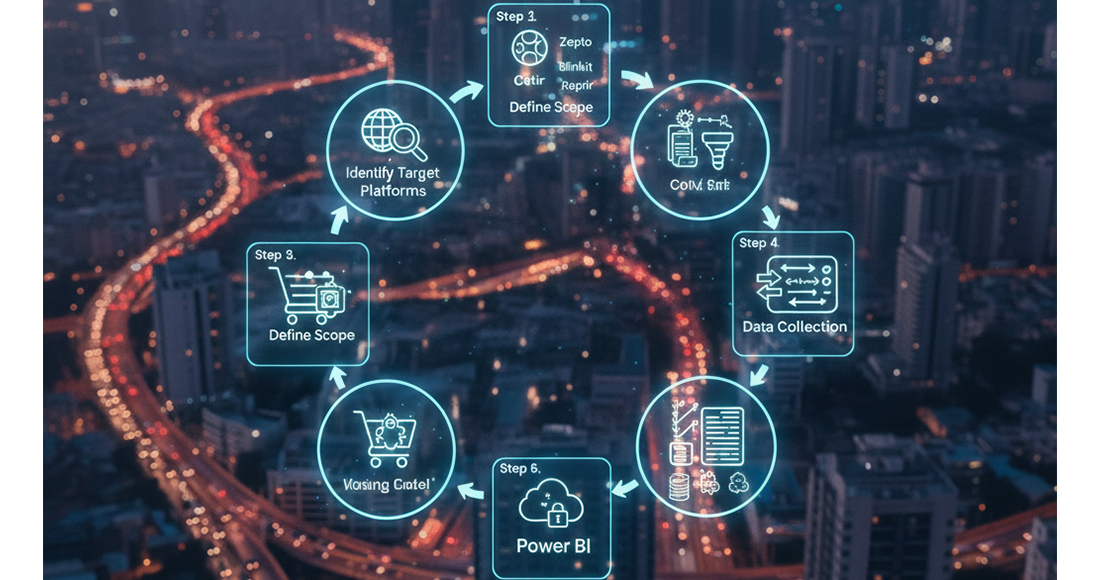
Step 1: Identify Target Platforms
Select platforms relevant to your markets:
- India: Zepto, Blinkit, Instamart.
- Europe: Getir, Gorillas, Flink.
- Middle East: Talabat Mart, Careem.
- Latin America: Rappi.
Step 2: Define Scope
Decide whether to focus on categories (e.g., groceries, beverages) or full datasets.
Step 3: Data Collection
- Use APIs where available.
- Apply web scraping frameworks like Scrapy, BeautifulSoup, Selenium.
- Employ cloud-based scraping solutions for scalability.
Step 4: Normalization
Standardize fields (e.g., units, currencies, product names) for cross-country comparison.
Step 5: Storage
Use SQL, MongoDB, or cloud-based data warehouses.
Step 6: Analysis
Feed datasets into BI dashboards (Power BI, Tableau) or AI models for forecasting.
Challenges in Scraping Quick Commerce Data
While rich in insights, scraping across countries presents challenges:
- Dynamic Platforms
Frequent price updates, app redesigns, and changing promotions. - Anti-Scraping Barriers
CAPTCHAs, IP blocking, and bot detection. - Data Cleaning Complexity
Different product names, categories, and units across countries. - Regulatory Differences
Varying data privacy laws (GDPR in Europe vs. flexible rules in Asia). - Localization Issues
Currencies, languages, and cultural differences impact interpretation. - Scale Management
Handling millions of records daily requires robust infrastructure.
Best Practices for Global Quick Commerce Scraping
- Define Clear Objectives
Focus on categories, regions, or competitors most critical to your business. - Use Rotating Proxies
Prevent IP blocking while scaling internationally. - Automate Regular Updates
Schedule scraping hourly, daily, or weekly depending on volatility. - Normalize for Cross-Country Analysis
Standardize SKUs, categories, and currencies. - Respect Compliance
Follow data privacy laws and ethical scraping guidelines. - Leverage AI for Analysis
Integrate scraped data with AI models for predictive insights. - Partner with Experts
Work with specialized scraping providers for scalability and accuracy.
Use Cases of Quick Commerce Data Scraping
For FMCG Brands
- Track brand visibility across global platforms.
- Compare pricing strategies across regions.
- Evaluate competitor promotions.
For Retailers
- Align in-store and online pricing.
- Adapt promotions to match or beat q-commerce platforms.
For Restaurants & Cloud Kitchens
- Monitor ingredient costs regionally.
- Benchmark delivery time and pricing.
For Market Analysts
- Study global consumer demand patterns.
- Forecast emerging categories (e.g., plant-based foods, organic).
For Investors
- Assess q-commerce growth potential in emerging markets.
Regional Examples of Quick Commerce Scraping
- India: Platforms like Zepto and Blinkit focus on aggressive promotions, with highly price-sensitive consumers. Scraping here reveals how discount cycles impact demand.
- Europe: Getir and Gorillas emphasize premium groceries and sustainable packaging. Scraping shows trends in organic and plant-based demand.
- Middle East: Talabat Mart leverages regional festivals like Ramadan for demand spikes. Scraping highlights seasonal consumption behaviors.
- Latin America: Rappi is diversified into groceries, meals, and even financial services. Scraping uncovers cross-category consumer preferences.
By comparing across geographies, businesses gain a global map of quick commerce dynamics.
The Future of Quick Commerce Data Scraping
The era of just spying will blur with AI, machine learning, and predictive analytics by 2025 and into the future. The business will not only scan with its two eyes but will predict excursions in the prices, demands, and things around the competitor in each country.
Future innovations may include:
- AI-Driven Dynamic Pricing: Automated global price adjustments.
- Hyperlocal Forecasting: Demand predictions by neighborhood, city, or country.
- Personalized Global Promotions: Tailoring offers to customer segments across borders.
- End-to-End Supply Chain Automation: Aligning procurement and logistics with international demand.
Quick commerce will become a data-first ecosystem, and scraping will be the foundation.
Conclusion: The Role of Food Data Scraping
Elevating the condition of the global retail industry and altering the ways in which consumers view essentials is being reshaped by the emergence of quick commerce. Indeed, it is not merely the speedier delivery that needs to be taken care of by business operators but the most critical aspect of real-time data intelligence.Scraping quick commerce data across countries enables:
- Cross-market price benchmarking.
- Competitive analysis of promotions.
- Regional demand forecasting.
- Supply chain and inventory optimization.
Food Data Scraping is at the heart of these revelations. When unstructured dynamic information from the internet is captured and the resultant data presented in a structured format, it allows companies to change their strategy from reactive to predictive and proactive. Food data scraping is not a tool but a challenge and a winning strategy for every FMCG Company, Retailer, Restaurant, or Investor who competes globally in the current age of fast delivery and consumer–food–on–demand commerce.
Leave feedback about this