

Introduction
One of the fastest-growing sectors of the global economy is the industry of online food delivery. In fact, customers are always looking for a quick way to understand and have access to the online menus, reviews, and ways in which they can get the food delivered to their doorstep. The other side of the coin is concerned about selling, and the businesses look at optimized pricing, operations, and the experience with customers. At the core of all the changes lies data, the fuel for enlightening insights and innovation.
Zomato is among the great players of this space and has joined the league. To do this, they possessed an extensive number of restaurant chains, and simultaneously reached over numerous countries for reviews, services of the food premises, and their menus. It is a mine full of structured data.
For businesses, analysts, and developers, that data is not only about food, but about consumer behaviors, monitoring competition, or the realization of probable market opportunities. The best way to get hands-on and analyze it is through the Zomato API.
In this blog, we’ll explore:
- Why Zomato data is valuable.
- What the Zomato API offers.
- How to extract and use Zomato data.
- Key use cases for restaurants, brands, and analysts.
- Benefits, challenges, and best practices.
- Why Food Data Scraping is the foundation for success in the online food economy.
Why Zomato Data Matters
Zomato is not just a food delivery app—it is a digital marketplace of consumer behavior. Every listing, review, and menu provides insights into:
- Visibility of Restaurants: Those places where the restaurants are listed and advertised to be recognized.
- Menu Price: The intimate workings are the dish-level details, the seasonal variations, and dynamic pricing.
- Consumer Sentiment: Ratings, combined with reviews, reveal the preferences and struggles of the consumers.
- Delivery Operations: The average delivery time, respective rates, and surge pricing are available.
- Regional Trends: The most famous culinary and dish trends in different cities.
For businesses, Zomato data provides both micro-level intelligence (e.g., dish popularity at a single outlet) and macro-level insights (e.g., cuisine trends across regions).
What Is the Zomato API?
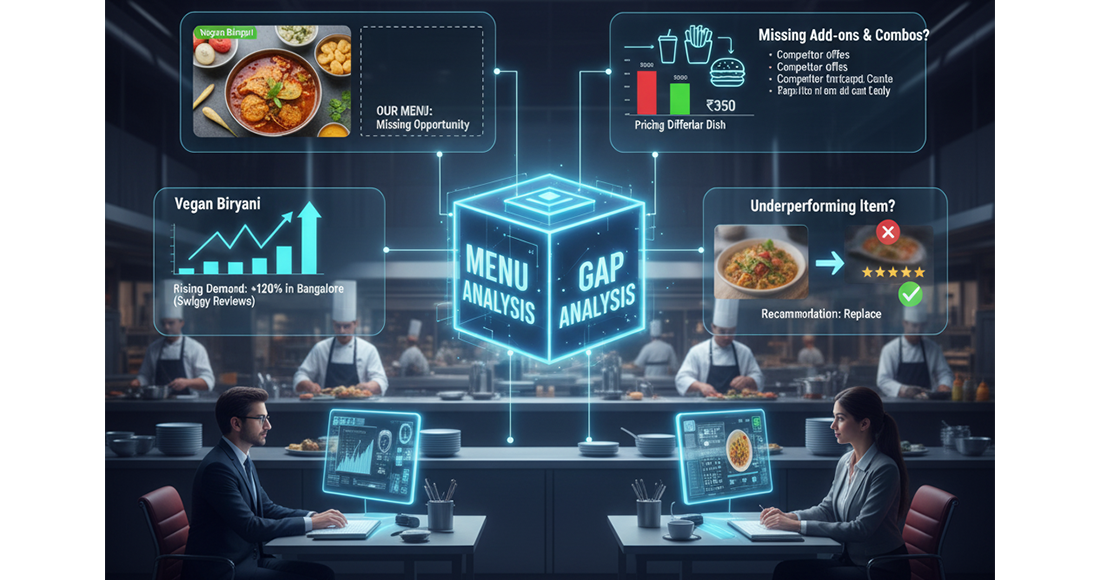
API is a structured system for facilitating communication between platforms. Generating structured data of restaurant menus and reviews easily obtained from the Zomato site, the Zomato API is ideally designed for developers and business analysts.
Features of the Zomato API:
- Restaurant Data
- Restaurant names, IDs, locations, and cuisines.
- Ratings, reviews, and delivery availability.
- Menu Data
- Item names, categories, portion sizes.
- Dish pricing and add-ons.
- Location Data
- City-level and neighborhood-level restaurant coverage.
- PIN-code-based listings.
- Promotions and Offers
- Discounts, BOGO offers, seasonal campaigns.
- Review Data
- Ratings, review text, and customer sentiment.
How to Extract Data Using Zomato API
Step 1: Get API Access
- Register on the Zomato developer platform.
- Obtain your API key for authentication.
Step 2: Identify Endpoints
Common endpoints include:
- /search – Search restaurants by city, keyword, or cuisine.
- /restaurant – Detailed info on a single restaurant.
- /reviews – Retrieve customer reviews.
- /categories – Get available categories.
- /cuisines – List cuisines in a city.
Step 3: Send Requests
Use tools like Postman or Python scripts.
Example in Python (pseudo-code):
import requests
api_key = “your_zomato_api_key”
headers = {“user-key”: api_key}
url = “https://developers.zomato.com/api/v2.1/search?entity_id=4&entity_type=city&q=pizza”
response = requests.get(url, headers=headers)
data = response.json()
for restaurant in data[‘restaurants’]:
print(restaurant[‘restaurant’][‘name’], restaurant[‘restaurant’][‘user_rating’][‘aggregate_rating’])
Step 4: Store and Process Data
- Save results in SQL, MongoDB, or cloud databases.
- Normalize menu categories and standardize prices.
Step 5: Analyze & Visualize
- Build dashboards in Tableau or Power BI.
- Use NLP for sentiment analysis on reviews.
- Benchmark against competitor menus.
Use Cases of Zomato API Data
1. Competitive Benchmarking
Track competitor menus, pricing, and promotions.
2. Menu Optimization
Identify popular dishes in specific regions to refine menus.
3. Customer Sentiment Analysis
Analyze reviews for recurring praise or complaints.
4. Expansion Planning
Use Zomato data to evaluate demand before opening new outlets.
5. FMCG Brand Monitoring
Track how branded packaged products are displayed across restaurants.
6. Delivery Insights
Understand how delivery charges and wait times influence orders.
Benefits of Zomato API Data Extraction
- Real-Time Market Intelligence
Capture live competitor updates. - Efficiency
Automate tasks that would take hours manually. - Scalability
Extract thousands of records across multiple cities. - Customization
Focus only on the most relevant data points. - Smarter Decisions
Replace guesswork with evidence-based strategies.
Challenges in Using Zomato API
- Rate Limits: Limited API calls per day.
- Dynamic Menus: Restaurants keep changing their dishes and prices, which requires being updated frequently with the retrieved prices.
- Anti-Scrape Measures: May have mechanisms like calling CAPTCHAs and alike detection tools from platforms themselves.
- Data Cleaning: It’s equivalent to normalization and cross-matching for proper comparisons.
- Legal Compliance: Will be guided by Zomato’s service conditions and local laws.
Best Practices for Zomato Data Scraping
- Define Goals Clearly
Focus on categories, cuisines, or competitors that matter most. - Automate Regular Updates
Schedule hourly or daily scraping for fresh data. - Normalize and Clean Data
Standardize formats for consistency. - Ensure Compliance
Respect legal and ethical guidelines. - Leverage Analytics Tools
Use visualization and BI dashboards for insights. - Partner with Experts
Outsource large-scale scraping to specialized vendors.
Zomato Data for Supply Chains and Restaurants
Scraped Zomato data can even impact supply chain and procurement:
- Anticipate demand for high-order dishes.
- Stock up on ingredients for trending cuisines.
- Reduce wastage by aligning supply with menu performance.
Restaurants can also:
- Use insights to introduce new menu items.
- Optimize delivery fees to improve conversion rates.
- Track customer loyalty by analyzing repeat review patterns.
The Future of Zomato Data Intelligence
By 2025, Zomato API data extraction will merge with AI, predictive analytics, and automation.
- AI-Driven Personalization: Predict which dishes to promote to customers.
- Predictive Pricing: Adjust menus based on demand forecasts.
- Customer Churn Prediction: Use review sentiment to retain loyal customers.
- Hyperlocal Marketing: Launch promotions targeted to PIN-code demand.
Data will no longer just inform strategies—it will actively shape them.
Scaling Businesses with Zomato API Data
Manage, compete, and maintain operations; this is precisely how the Zomato API data aids smaller restaurants. In contrast, it maintains consistency among large national chains. SKU-level insights about restaurant exposures of FMCG brands are offered. For investors, it can provide macro-trend insights that point to growth opportunities.
Zomato data is crucial for sustainable growth, plain and simple.
Conclusion: The Essential Role of Food Data Scraping
What Zomato has done is that it revolutionized the way people discover and order food in restaurants, but for businesses, it means a data hub real-time impeccably. And when they utilize the Zomato API, they can do something along these lines:
- Extract structured restaurant and menu data.
- Track competitors and optimize pricing.
- Analyze reviews to improve customer experience.
- Plan strategic growth with regional insights.
At the heart of this opportunity lies Food Data Scraping—the process of turning scattered digital information into actionable intelligence. For restaurants, FMCG brands, and analysts, food data scraping is not just a technical capability—it is the foundation of innovation and growth in the food delivery ecosystem.
Leave feedback about this