

Introduction
The shifting of the grocery industry toward digital-first has been happening with lightning speed. Gone were the days when browsing aisles at physical supermarkets was all there was to grocery shopping; now, aisles are traveled through mobile apps where one carefully picks and chooses from among products, having their prices compared on one’s mobile screen, only to be delivered right to one’s home. Among many existing supermarket chains, Stop & Shop has successfully transitioned itself into a trusted grocery retailer across the U.S.
On a more substantial note, Stop & Shop can be a valuable data source for businesses, analysts, and developers. Prices, inventory levels, promotions, product categories, and regional availability emerge as critical insights that could shape the competitive strategies. In view of the above, businesses draw data from the Stop & Shop API or a Grocery Scraping API to use data efficiently.
In this blog, we’ll cover:
- Why Stop & Shop data is valuable.
- What a grocery scraping API is and how it works.
- How to extract and use Stop & Shop data.
- Use cases for retailers, brands, and analysts.
- Benefits, challenges, and best practices.
- Why Food Data Scraping is the foundation of future grocery intelligence.
Why Stop & Shop Data Matters
Stop & Shop operates in a highly competitive market where price sensitivity, product availability, and promotions drive customer decisions. By analyzing data from its platform, businesses can gain insights such as:
- Product Listings – Name, brand, category, and pack size.
- Pricing – Regular price, discounts, promotional deals.
- Availability – In-stock vs. out-of-stock signals.
- Regional Variations – Different products available in different stores or ZIP codes.
- Seasonal Trends – Festive discounts, holiday promotions, or seasonal SKUs.
For example:
- An FMCG brand can monitor how its products are priced compared to competitors.
- A competitor supermarket can analyze Stop & Shop’s promotions to adjust its own.
- Researchers can identify changing consumer preferences by tracking top-selling categories.
In short, Stop & Shop data represents a live snapshot of consumer demand in the grocery industry.
What Is a Grocery Scraping API?
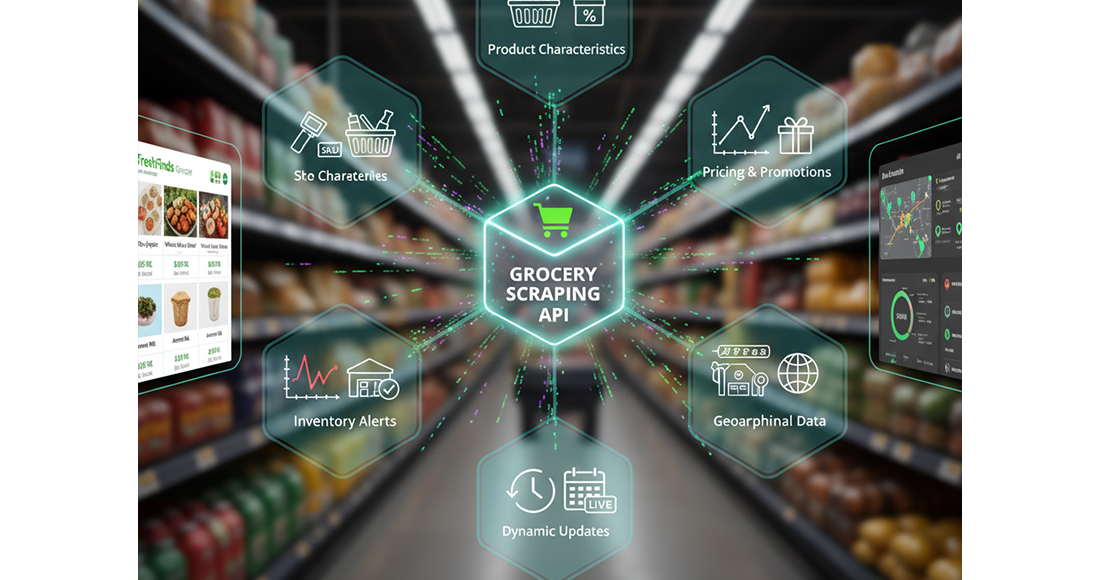
A Grocery Data Scraping API is a helpful tool for extracting structured data from online grocery apps like Stop & Shop and online grocers. A key difference is that while previously one could only see a handful of products at a time while manually browsing, this can be provided through the large-scale feeds at any time.
Features of Grocery Scraping APIs:
- Product Characteristics: Collect information on SKUs, product explanations, and classes.
- Selling Hints: Acquire base prices, price cuts, and promotions.
- Inventory Alerts: Determine stock alterations in real time.
- Geographical Data: Assay modifications in product information over ZIP codes or regions.
- Dynamic Updates: Monitor daily, hourly, or real-time changes.
APIs transform raw grocery listings into actionable datasets for business growth.
How Stop & Shop API (Scraping API) Works
Far from a readily available product offered by the retailer, the API of a Stop & Shop is more akin to a retail sector product that obtains data through data scraping APIs interacting with completely structured interactions with the Stop & Shop site or application to enable one to collect desired data from the business to useful data.
Steps to Extract Data:
- Set Objectives: Decide whether you want product pricing, promotions, or availability.
- Identify Endpoints: Define URLs or APIs that represent product categories or search results.
- Request Data: Use Python, Node.js, or other tools to make calls.
- Parse Responses: Extract structured fields like product name, price, and availability.
- Store Data: Save in databases like MySQL, MongoDB, or cloud storage.
- Clean & Normalize: Remove duplicates, standardize categories, and unify units.
- Analyze: Feed into BI tools like Tableau or Power BI.
Example (Python pseudo-code):
import requests
from bs4 import BeautifulSoup
url = “https://stopandshop.com/category/snacks”
response = requests.get(url)
soup = BeautifulSoup(response.text, ‘html.parser’)
for product in soup.find_all(“div”, class_=”product-card”):
name = product.find(“span”, class_=”product-name”).text
price = product.find(“span”, class_=”product-price”).text
print(name, price)
This simple script shows how structured product data can be collected for analysis.
Key Data Points Extracted from Stop & Shop
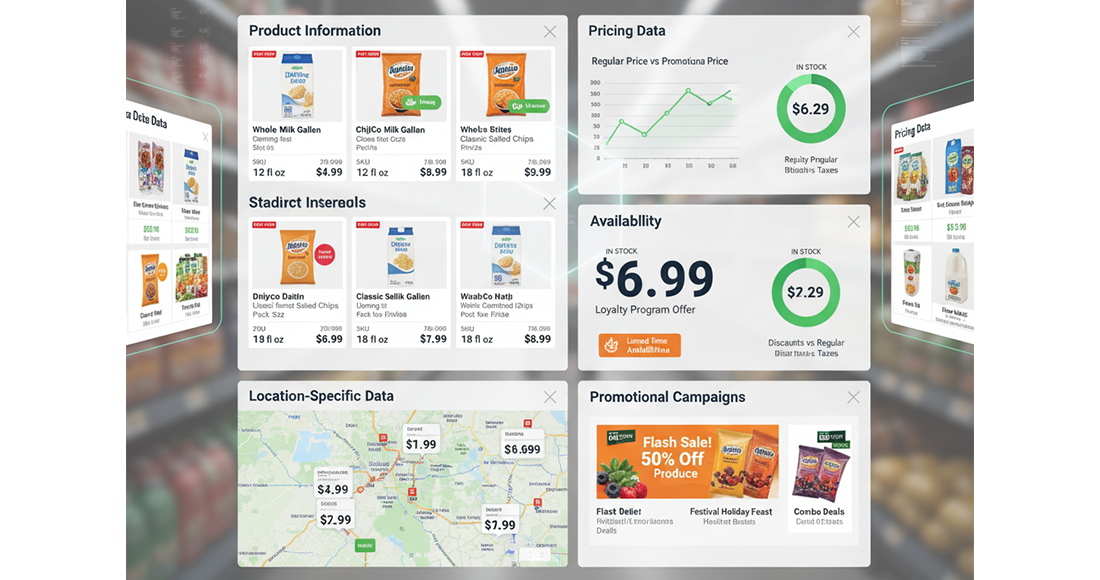
1. Product Information
- SKU, product name, brand.
- Category and sub-category.
- Pack size and variants.
2. Pricing Data
- Regular price.
- Promotional discounts.
- Loyalty program offers.
3. Availability
- Stock status (in-stock, out-of-stock).
- Seasonal availability.
4. Location-Specific Data
- Products listed differently across ZIP codes.
- Regional price variations.
5. Promotional Campaigns
- Flash sales.
- Festival discounts.
- Combo deals.
Use Cases of Stop & Shop Data Scraping
1. Competitive Intelligence for Retailers
Supermarkets can benchmark their pricing and promotions against Stop & Shop to remain competitive.
2. FMCG Brand Monitoring
Brands can see how their SKUs are displayed, priced, and promoted compared to rivals.
3. Dynamic Pricing Strategies
Restaurants or retailers can adjust their prices dynamically based on Stop & Shop data.
4. Supply Chain Optimization
Out-of-stock signals help suppliers manage inventory distribution.
5. Regional Demand Insights
Location-specific data identifies high-demand categories in particular neighborhoods.
6. Promotion Benchmarking
Analyze Stop & Shop’s holiday campaigns to design competitive offers.
7. Market Research
Track changing product preferences (organic, vegan, gluten-free) to predict industry shifts.
Benefits of Using a Stop & Shop Scraping API
- Real-Time Market Awareness
Stay updated on competitor pricing, promotions, and stock. - Improved Profit Margins
Optimize pricing and promotions without over-discounting. - Operational Efficiency
Plan inventory based on demand and availability trends. - Customer Retention
Offer better deals aligned with customer expectations. - Faster Innovation
Identify new categories (e.g., plant-based products) early. - Scalable Intelligence
Collect and analyze thousands of SKUs across locations simultaneously.
Challenges in Grocery Data Scraping
- Dynamic Site Structures: Frequent updates on Stop & Shop’s site may break scrapers.
- Scraping Prevention: Some of the stuff we do to stop scrapers is to limit rates, gather text or images, or even directly use CAPTCHA to block scrapers, and block IP addresses.
- Data Cleaning: Data processing poses the need for the transformation of units, categories, and promotions, i.e., the numeric transformation of the data for analysis.
- On-the-spot Scalability: More database hardware checks must be required in order to access such large sets of data.
- Legal and Ethical: Scraping generally tedious job-must be done in line with users’ rights and privacy laws.
Best Practices for Grocery Scraping APIs
- Define Objectives Clearly
Avoid scraping irrelevant data; focus on insights aligned with your goals. - Automate Regular Updates
Grocery data changes rapidly—daily or hourly scraping may be required. - Normalize Data
Standardize naming conventions, units, and categories. - Stay Ethical & Compliant
Respect Stop & Shop’s policies and data privacy laws. - Use Proxies & Rotation
Avoid detection and blocking. - Integrate with Analytics Tools
Make insights actionable with dashboards and visualization. - Leverage Experts
Outsource to professional scraping vendors for scalability.
Future of Grocery Intelligence with APIs
The future of grocery will be built on AI + Food Data Scraping:
- Predictive Pricing Models: Forecast promotions and demand peaks.
- AI-Powered Personalization: It is the art of providing individualized deals to each shopper.
- Dynamic Inventory Management: Logically adjust the stock in an automated way to customer signals.
- Category Forecasting: Prediction of elements in demand like organic, vegan, raw, or functional foods.
By combining Stop & Shop APIs with machine learning, businesses can build predictive intelligence systems that go beyond historical analysis.
Scaling Grocery Businesses with Data APIs
For local grocers, scraping offers immediate insights into pricing and competition. For national FMCG brands, it ensures accurate monitoring of SKUs across regions. For researchers, it creates comprehensive datasets for consumer trend analysis.
Grocery APIs give businesses keyline actionable intelligence that can help them transform fragmentary listings into coherent and planned productive actions, managing limited budgets, and maximizing every cent used.
Conclusion: The Role of Food Data Scraping
Stop & Shop isn’t just a supermarket; it’s a real-time-data ecosystem. Analyzing its website allows comparison to competitive intelligence, what with thousands of SKUs, dynamic promotions, and constantly shifting regional inventories.
A Stop & Shop Grocery Scraping API helps businesses:
- Automate data extraction.
- Benchmark pricing and promotions.
- Optimize inventory and supply chains.
- Track regional demand shifts.
Scouring food data is the process by which arbitrarily arranged food data is converted into structured, action-packed actionable insights. For merchants, FMCG brands, and analysts, food data scraping is not a tool but the very essence of growth in the digital grocery revolution.
Leave feedback about this