

Introduction
In a hyper-competitive food delivery market, prices are the difference between breakeven and winning for a restaurant. Dozens of similar-cuisine restaurants are oftentimes located within the same delivery radius, and then price together with just reviews may well be factors that would directly lead a customer to choose it. The difference in menu pricing – or sometimes an extra discount available then – could immediately move the customer’s decision along a price curve.
Delivery companies like Swiggy, Zomato, Uber Eats, DoorDash, Deliveroo, and Talabat have multiplied this with competition. Competitors provide the most updated menu and ongoing promotions much so that they will see not only what the restaurant offers but also what the competitors are offering. This has put tremendous pressure on restaurants to evolve in changing the way they price things.
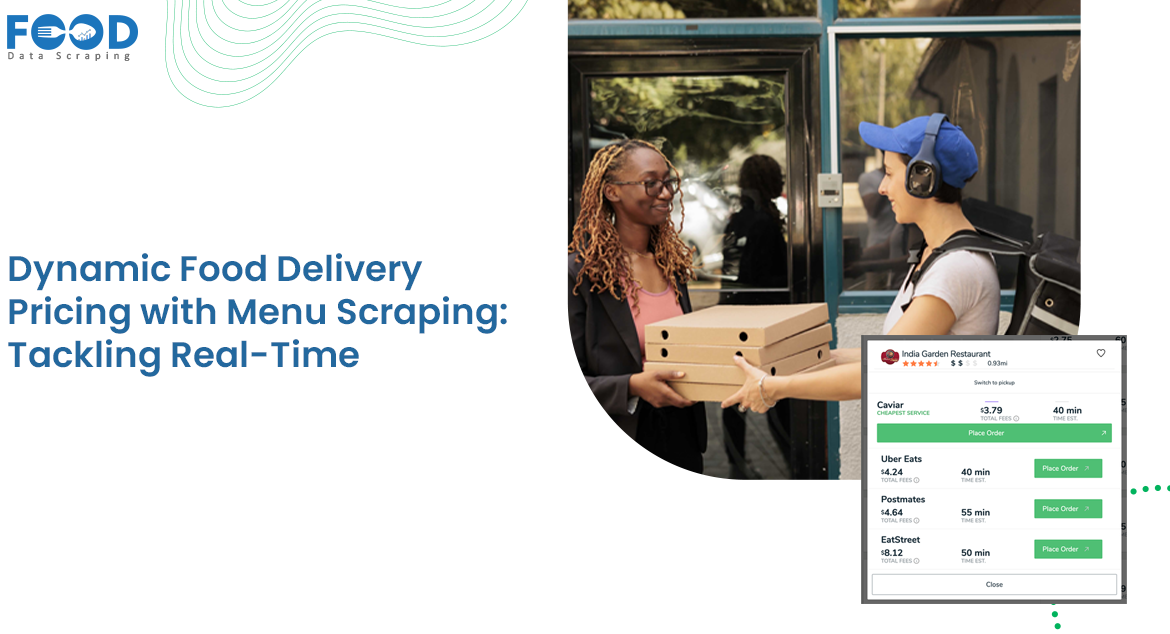
But, the real challenge is: How can restaurants monitor their competitors’ menu prices continually and adjust their prices immediately when they are changed? It is then an impossibility to monitor these by manual comparison.
This blog explores how dynamic food delivery pricing powered by menu scraping addresses real-time competitor challenges, the benefits it brings, challenges to watch out for, and why Food Data Scraping is the foundation for future-ready restaurant strategies.
The Rise of Dynamic Pricing in Food Delivery
Dynamic pricing is not new; indeed, it is an accepted practice in at least two industries, namely aviation and ride-hailing, where, for instance, airlines often adjust flight ticket prices according to route, variation in time, and demand, while ride-hailing applications push surge pricing in busy hours.
In food delivery, the same principle applies:
- Response of Buyer Demand: This action can also increase the cost of biryani over the weekends due to a high demand for biryani.
- Time Slot Menu Pricing: Pricing for breakfast items may differ from what an establishment may charge for late-night snacks.
- Competitive Pricing: A market critical behavioral change will allow competitors to reduce prices or risk the loss their customers to the falling prices of the competitors’ means.
- Promotions & Offers: Flash sales or festive marketing campaigns will cause shifting prices.
Adjustable pricing schemes allow businesses to stay competitive, profitable, and relevant in ever-innovating markets.
Why Menu Scraping Matters
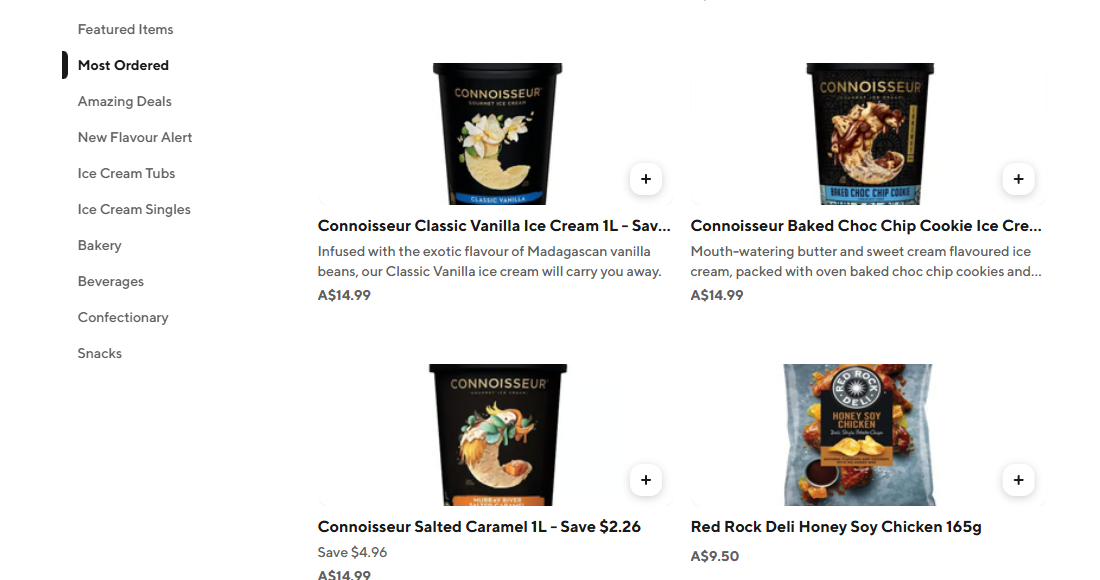
Menu scraping is a process that involves extracting structured content of the restaurants in different delivery platforms. Analyzing pricing, promotions, and menu decisions becomes data-based businesses for restaurants when they can look into competitor menus.
Key insights from menu scraping:
- Dish-Level Pricing: Compare item-by-item costs across competitors.
- Discount Tracking: Monitor active promotions and flash sales.
- Regional Variations: Identify how prices differ by location.
- Menu Trends: Spot popular add-ons, combos, or limited-time offers.
- Delivery Charges: Understand the complete cost equation for customers.
Without menu scraping, restaurants operate in the dark. With it, they gain real-time visibility into competitive strategies.
Real-Time Competitor Challenges Solved by Menu Scraping
1. Competitor Price Wars
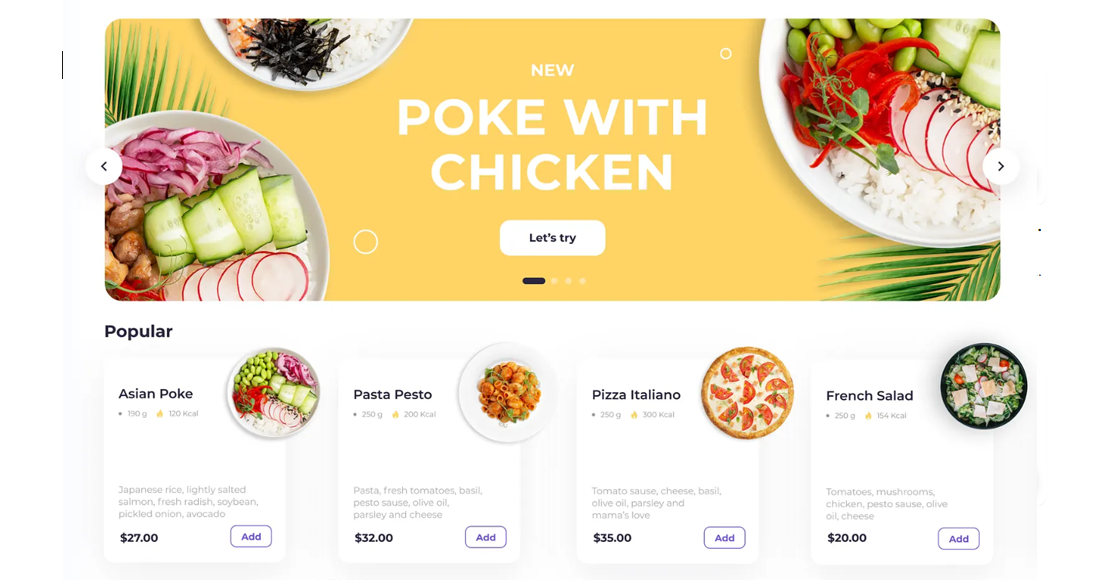
In case a competitor reduces 10% of the prices, by scraping, one would know right away and might take the necessary steps to either change the provision of services or put more focus on USPs.
2. Flash Sales & Limited-Time Discounts
It is quite often that promotional offers are launched for short-term periods on many channels. Such offers are detected in real time by scraping the menus, so that this might enable the restaurants to answer appropriately or produce a counteroffer.
3. Regional Price Disparities
Different places set pricing differently for one dish. Thus, scraping menus helps in providing insight by showing these differences. This then helps multi-location brands develop new strategies.
4. Menu Expansion & Innovation
Once scraped, one learns of hot-listed menus or makeovers, such as the introduction of vegan desserts and plant-based burgers-be alert, otherwise you get left behind.
5. Delivery Fee Comparison
Sometimes, customers choose based not on food price but on delivery charges. Scraping allows monitoring of delivery fee structures across platforms.
6. Customer Value Perception
By comparing prices, discounts, and reviews, scraping reveals whether your restaurant offers the best value-for-money perception.
Use Cases of Dynamic Pricing via Menu Scraping
Restaurants and Cloud Kitchens
- Adjust dish prices based on competitor benchmarks.
- Offer combo deals that rival competitors’ bundles.
- Increase margins by aligning promotions with demand.
FMCG and Packaged Food Brands
- Monitor product pricing when listed through restaurants or marketplaces.
- Compare competitor SKUs across multiple platforms.
Delivery Platforms
- Enhance ranking algorithms by factoring in dynamic price competitiveness.
- Optimize platform-driven promotions by tracking real-time competitor offers.
Market Researchers & Investors
- Study consumer pricing trends across geographies.
- Forecast the impact of seasonal promotions.
Benefits of Dynamic Pricing with Menu Scraping
- Competitive Advantage
Stay ahead by reacting instantly to competitor price changes. - Higher Profit Margins
Use data-driven insights to set prices that balance competitiveness and profitability. - Customer Retention
Keep customers from defecting due to cheaper alternatives. - Faster Innovation
Add trending dishes identified through competitor menus. - Scalable Intelligence
Apply pricing strategies across multiple outlets or regions. - Data-Driven Promotions
Design smarter offers that outperform competitor campaigns.
Challenges in Implementing Dynamic Pricing
While powerful, dynamic pricing via scraping faces hurdles:
- Platform Restrictions: Delivery apps may block excessive scraping attempts.
- Constant Menu Updates: Competitors frequently modify menus, requiring continuous tracking.
- Data Cleaning: Raw scraped data needs normalization to compare across formats.
- Legal Compliance: Scraping must respect platform terms of service and privacy laws.
- Customer Perception: Overly aggressive pricing changes may erode trust.
Best Practices for Menu Scraping and Dynamic Pricing
- Define Clear Goals
Decide whether to focus on pricing, offers, or regional coverage. - Automate Regular Updates
Schedule hourly or daily scraping to capture dynamic changes. - Normalize Data
Standardize menu names and categories for accurate comparison. - Stay Ethical
Respect platform terms and adhere to local regulations. - Leverage Analytics
Use BI dashboards (Power BI, Tableau) for real-time visualization. - Outsource Expertise
Partner with specialized providers for large-scale, reliable scraping.
Future of Dynamic Pricing in Food Delivery
The next evolution of dynamic pricing will integrate with AI and predictive analytics:
- AI-Powered Adjustments: Prices will change automatically in response to competitor moves.
- Predictive Pricing Models: Anticipate demand spikes during weekends or festivals.
- Customer-Specific Pricing: Personalized discounts based on order history.
- Inventory-Linked Pricing: Dynamic adjustments tied to available stock.
Dynamic pricing will become as essential to food delivery as surge pricing is to ride-hailing apps.
Scaling Multi-Location Restaurants with Dynamic Pricing
For single outlets, scraping ensures competitiveness. For multi-location chains, it’s a game-changer:
- Standardize pricing where needed while customizing regionally.
- Launch targeted promotions in specific cities.
- Optimize supply chains by forecasting demand tied to pricing shifts.
By scaling intelligently, restaurants can protect margins while boosting market share.
Conclusion: The Role of Food Data Scraping
The food delivery market is changing beyond taste in great ways due to real-time intelligence, real-time adaptiveness, and competitive awareness. That’s what the customers want in the first place.
By leveraging menu scraping for dynamic pricing, restaurants can:
- Track competitor moves in real time.
- Adjust prices strategically without hurting margins.
- Stay ahead of flash sales and promotional campaigns.
- Scale growth across multiple regions with data-backed confidence.
Food Data Scraping, the cutting-edge technology nowadays that turns all the scattered menus and pricing details into insights in the present day. For all restaurants that wish to ship themselves into the immediate delivery-buzz economy, food data scraping is not just an added strategy but one important source for their further survival and well-being!
Leave feedback about this