

Introduction
The food and grocery delivery scenario has undergone a remarkable change over the past few years. From long delivery windows to 10-minute deliveries, the customers were also demanding much, and platforms too had to innovate to meet those demands. Leading that change is a new-age commerce: quick commerce, or q-commerce—an entirely new business concept of delivering groceries, essentials, and readymade food items in record times.
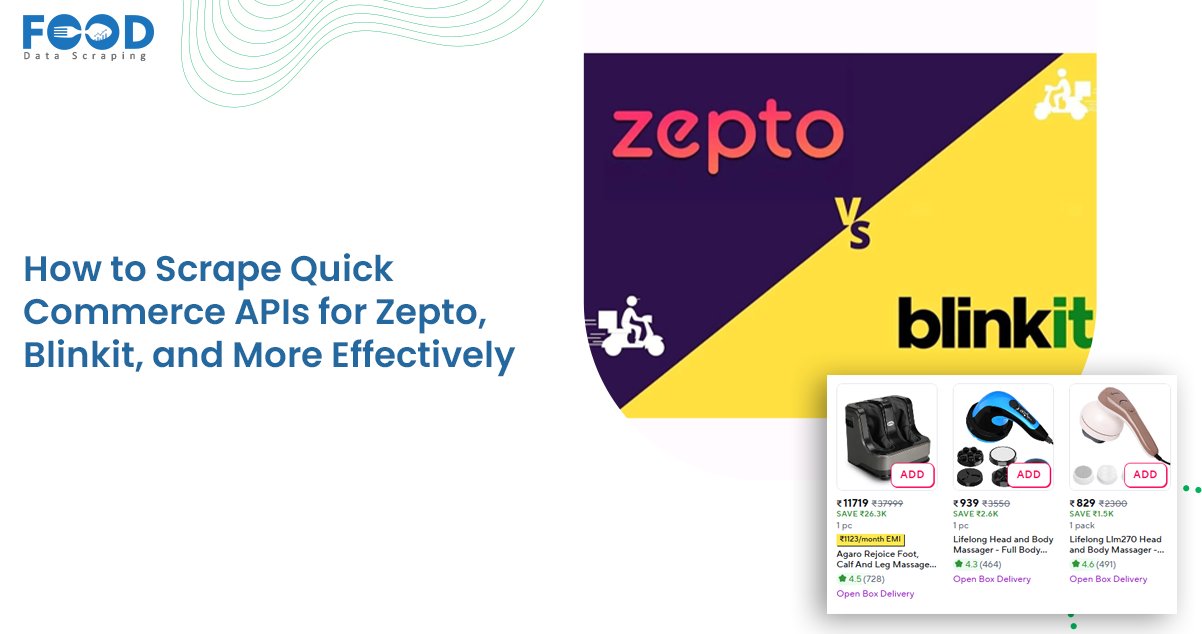
In India, Instamart (Swiggy Instamart), Zepto, and Blinkit (formerly Grofers) are at the forefront of q-commerce. Together, they have refashioned the grocery shopping habits of millions of urban customers.
But behind q-commerce’s speed and convenience lies a stronger force: data. Every SKU, price change, delivery fee, and inventory change is a valuable piece of information for any business aspiring to stay ahead in the game. But it is no child’s play to absorb this data at scale. And the Quick Commerce Data APIs provide an answer to this problem.
This blog explores the role of data APIs in q-commerce, the specific opportunities with Instamart API, Zepto API, and Blinkit API, the business use cases they unlock, challenges to consider, and why Food Data Scraping remains a critical growth driver for brands and businesses.
Why Quick Commerce Data Matters
Quick commerce isn’t just a delivery service—it’s a mirror of real-time consumer demand. Unlike traditional e-commerce, where shopping patterns are planned, q-commerce reflects:
- Impulse buying trends (e.g., snacks, beverages, desserts).
- Time-sensitive consumption (e.g., milk and bread in the morning, ice cream late at night).
- Hyperlocal demand variations (e.g., regional snacks in one city vs. organic products in another).
- Dynamic pricing and promotions that change daily or even hourly.
By analyzing q-commerce data, businesses can uncover:
- What customers are buying most frequently.
- How pricing strategies affect order volume.
- Which categories are underrepresented in certain locations?
- How competitors run offers and promotions.
APIs make it possible to collect and use this data systematically.
What Are Quick Commerce Data APIs?
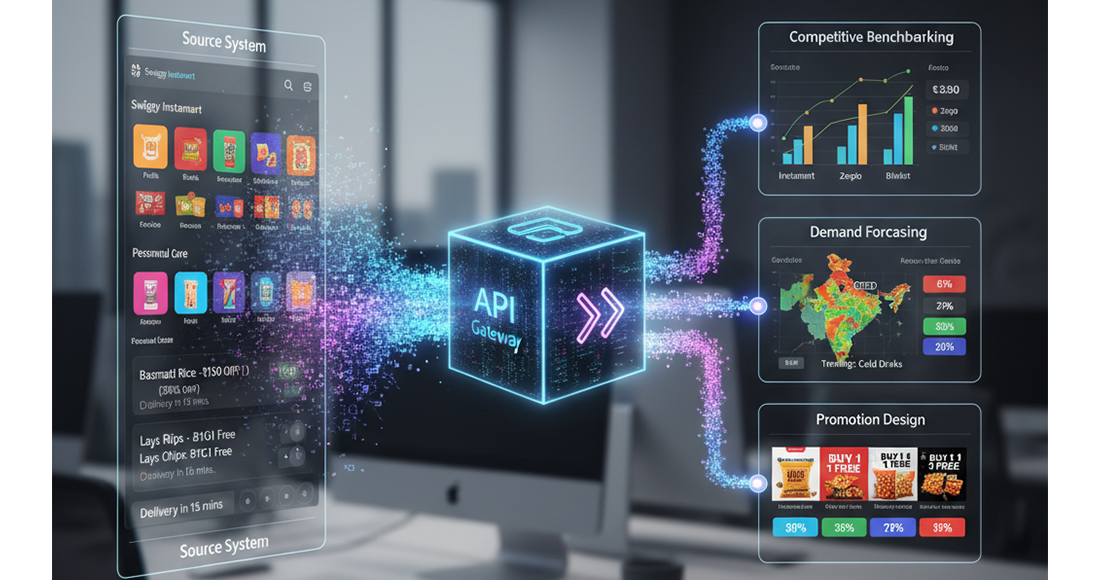
APIs serve as software tools and infrastructure that interface on one side and pass predefined information on the other. Essentially, for commerce, APIs would allow businesses to mine structured information such as:
- Product listings
- Pricing and discounts
- Inventory availability
- Delivery charges and times
- Store coverage by PIN code
- Promotions and offers
Instead of scraping data manually or building fragile scripts, APIs provide a scalable and automated way to gather critical insights.
Understanding Instamart API
Swiggy’s Instamart has quickly become one of the leaders in India’s q-commerce space, leveraging Swiggy’s delivery network and loyal customer base.
Data Available from Instamart API:
- Product catalogs across categories (fruits, snacks, beverages, personal care).
- Real-time pricing, including discounts and MRP.
- Stock availability at the local store level.
- Delivery charges and estimated delivery times.
- Location-based product visibility (different PIN codes show different assortments).
Use Cases:
- Competitive Benchmarking: Track how Instamart prices staples like rice, atta, or packaged snacks compared to Zepto and Blinkit.
- Demand Forecasting: Monitor trending products across regions.
- Promotion Design: Analyze which offers Instamart pushes most often (e.g., “Buy 1 Get 1 Free” on snacks).
Understanding Zepto API
Zepto disrupted the market with its bold promise of 10-minute grocery delivery, which made it a consumer favorite.
Data Available from Zepto API:
- Ultra-fast inventory updates.
- SKU-level product details, including brand, pack size, and category.
- Pricing, discounts, and time-bound offers.
- Store-level coverage by PIN code.
- Delivery performance metrics.
Use Cases:
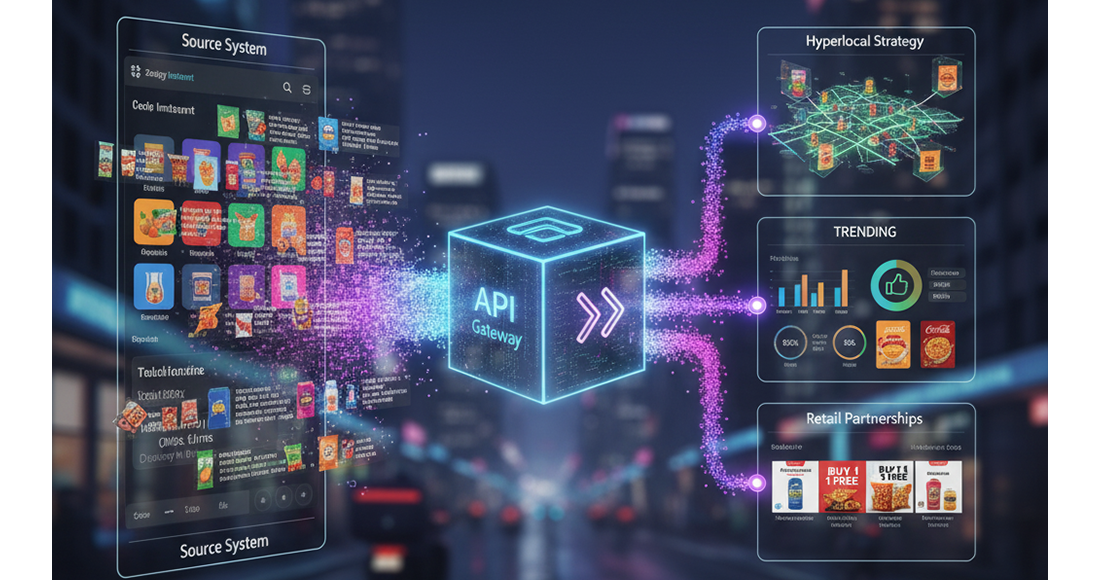
- Hyperlocal Strategy: Identify how Zepto customizes product catalogs for neighborhoods.
- Consumer Insights: See which FMCG products appear as “most ordered” or “recommended.”
- Retail Partnerships: Brands can track how their products are displayed compared to competitors.
Understanding Blinkit API
Blinkit (formerly Grofers) has reinvented itself as a quick commerce leader, supported by Zomato’s ecosystem.
Data Available from Blinkit API:
- Comprehensive grocery categories with real-time updates.
- Dynamic pricing with heavy reliance on discounts.
- Regional inventory insights.
- Customer rating and review integration on select SKUs.
- Delivery fees and surge pricing.
Use Cases:
- Market Expansion: Track Blinkit coverage by PIN codes to identify underserved areas.
- Promotion Analysis: Compare frequency of discounts against Instamart and Zepto.
- Category Trends: Discover growth in niche categories like organic, vegan, or imported snacks.
Business Use Cases of Quick Commerce Data APIs
1. Competitive Pricing Intelligence
Track prices across Instamart, Zepto, and Blinkit in real time to remain competitive.
2. Category Insights
Discover trending categories (e.g., protein shakes, plant-based foods) and align inventory.
3. Inventory Optimization
Scrape product availability to avoid stockouts in high-demand categories.
4. Hyperlocal Targeting
Analyze demand variations by PIN code to localize marketing campaigns.
5. Brand Visibility Audits
For FMCG brands, APIs help track how prominently products are displayed across platforms.
6. Promotion Strategy
Benchmark discounts and offers across platforms to design competitive promotions.
7. Demand Forecasting
Identify seasonal trends (e.g., ice cream spikes in summer, dry fruits during festivals).
8. Expansion Planning
Use coverage data to decide which cities or PIN codes to target next.
Benefits of Using Quick Commerce Data APIs
- Real-Time Market Awareness
Monitor competitors and customer demand continuously. - Improved Margins
Adjust pricing and promotions based on competitor data. - Operational Efficiency
Optimize supply chain and inventory management. - Data-Driven Expansion
Make informed decisions about new market entries. - Customer Retention
Tailor products and promotions to meet evolving preferences. - Faster Innovation
Spot emerging trends and launch new products ahead of competitors.
Challenges in Leveraging Quick Commerce APIs
- API Access Restrictions: Platforms may limit direct API access to partners.
- Data Fragmentation: Different platforms structure their data differently.
- Anti-Scraping Measures: Unauthorized scraping may trigger IP blocks.
- Data Volume: Handling millions of SKUs across cities requires robust infrastructure.
- Legal Compliance: Businesses must adhere to data protection laws and platform policies.
Best Practices for Quick Commerce Data Scraping
- Define Objectives Clearly
Focus on specific goals like pricing, demand trends, or inventory coverage. - Ensure Data Quality
Clean and standardize scraped data before analysis. - Automate Regular Updates
Q-commerce data changes rapidly—daily or hourly scraping may be required. - Respect Compliance
Use ethical scraping practices within legal frameworks. - Leverage Analytics Tools
Feed cleaned data into BI platforms like Tableau or Power BI. - Scale Infrastructure
Use cloud-based systems to handle large datasets efficiently.
The Future of Quick Commerce Data Intelligence
The q-commerce sector is heading toward even deeper data integration:
- AI-Powered Pricing: Real-time competitor benchmarking for dynamic price adjustment.
- Personalized Recommendations: Promotions tailored to individual customers.
- Predictive Analytics: Predicting demand spikes.
- Automated Supply Chains: Directly linking scraped demand data to inventory purchase.
The API-working and scraping businesses will have the determination in accessing food and grocery delivery in the future.
Scaling Businesses with Quick Commerce Data
For local restaurants, APIs provide a view of competitor pricing. For FMCG brands, they deliver a nationwide picture of product visibility and demand. For investors, they highlight growth hotspots in urban consumption.
No matter the scale, quick commerce data APIs turn guesswork into actionable strategy.
Conclusion: Why Food Data Scraping Is Essential
It is not just about having groceries at our doorstep within minutes; this new q-commerce revolution incited by Instamart, Zepto, and Blinkit is now shaping the very future of retail and consumer approach.
By leveraging Quick Commerce Data APIs, businesses can:
- Benchmark pricing in real time.
- Track category demand trends.
- Optimize inventory planning.
- Design smarter promotions.
- Expand into new locations with confidence.
At the foundation of all these advantages lies Food Data Scraping—the practice of transforming raw platform data into structured intelligence. For businesses determined to grow in the ultra-competitive q-commerce landscape, food data scraping isn’t optional—it’s the cornerstone of success.
Leave feedback about this