

Introduction
Cloud kitchens, also known as ghost kitchens, virtual restaurants, or dark kitchens, have created a paradigm shift in the food industry. These kitchens operate without a dine-in space, relying totally on the online orders placed through platforms like Swiggy, Zomato, Uber Eats, or DoorDash. With lower overhead costs, rapid scalability, and the possibility to experiment with more than one brand out of a single kitchen, cloud kitchens are redefining how people love food from the third sources.
But when it comes to success in the highly competitive market, there is no guarantee. With thousands of players entering the field, success is being unlocked by the use of data by cloud kitchens more efficiently. Consumer behavior, competitor pricing, menu innovation, delivery time, and regional preferences for food determine success.
Food data scraping technology comes into play here. By methodically gathering and analyzing public information from food apps, restaurant listings, and grocery e-commerce sites, cloud kitchen operators gain real-time competitive intelligence and scale operations with precision.
In this blog, we’ll explore:
- Why cloud kitchens need data scraping to grow.
- The specific data points they should extract.
- The benefits of data-driven decision-making.
- Common challenges and best practices.
- How to build long-term scalability with data scraping technology.
Why Cloud Kitchens Need Data Scraping
Unlike traditional restaurants, cloud kitchens rely almost entirely on digital visibility and operational efficiency. A kitchen’s success is determined by how well it performs on delivery apps—how competitive its pricing is, whether its menu matches consumer demand, and how efficiently it fulfills orders.
Here’s why data scraping is essential:
- Hyper-Competitive Market
With thousands of kitchens launching every year, monitoring competitors at scale is nearly impossible manually. Scraping automates this process. - Dynamic Consumer Preferences
Food trends change quickly. For example, a sudden rise in vegan demand or seasonal cravings like mango desserts. Scraping helps kitchens identify and act on trends before competitors. - Platform-Driven Promotions
Delivery apps regularly push discounts and offers. Cloud kitchens must track these changes to stay visible. - Operational Optimization
Scraping delivery times, surge pricing, and reviews helps kitchens improve logistics and customer satisfaction.
What Data Can Be Scraped for Cloud Kitchens?
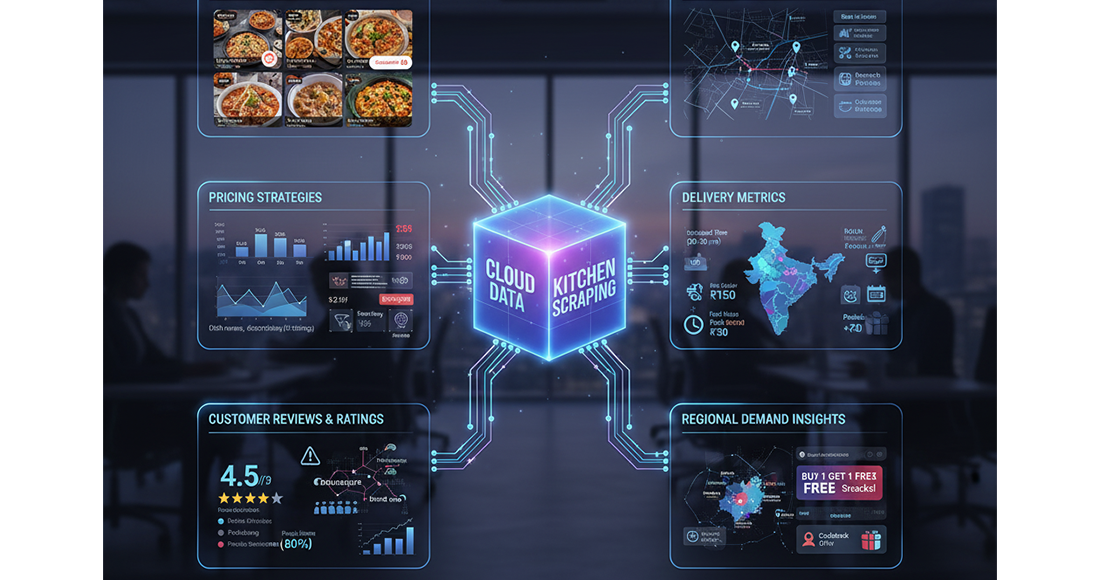
The food delivery ecosystem offers a wealth of structured and unstructured data. Key categories include:
1. Competitor Menus
- Dish names, categories, and detailed descriptions.
- Seasonal or limited-time offerings.
- New launches by competing kitchens.
2. Pricing Strategies
- Standard pricing and regional differences.
- Discounts, coupons, and surge pricing.
- Combo meals and bundling strategies.
3. Customer Reviews & Ratings
- Star ratings per dish or restaurant.
- Common feedback themes (taste, packaging, delivery speed).
- Sentiment analysis for competitor benchmarking.
4. Delivery Metrics
- Estimated delivery times by area.
- Minimum order values.
- Delivery charges during peak vs. off-peak hours.
5. Regional Demand Insights
- Popular cuisines in specific cities.
- Preferred dishes during festivals or weekends.
- Demand variation by neighborhood demographics.
6. Platform Promotions
- Buy-one-get-one deals, cashback offers, seasonal discounts.
- App-specific banner promotions highlighting certain brands.
Together, these datasets empower kitchens to make smarter decisions across pricing, menu design, operations, and marketing.
Use Cases: How Data Scraping Powers Cloud Kitchen Growth
1. Competitive Pricing Intelligence
The pricing of items can be compared by cloud kitchens with similar dishes served in the area of delivery area. For example, if three competitors price their “Paneer Butter Masala” between ₹220 and ₹250, a cloud kitchen strategically prices it at just ₹230 while adding in some great add-ons for winning customers.
2. Menu Innovation and Optimization
By scraping competitor menus, it’s possible to see where the gaps lie. Say Mexican cuisine is trending in one neighborhood, and only a handful of kitchens offer it; a cloud kitchen can set up a taco-and-burrito-centric new brand.
3. Operational Efficiency
With competitive data on average delivery times, kitchens would seek to optimize delivery partners, packaging efficiency, and kitchen workflows.
4. Demand Forecasting
The data scraping exposes seasonal trends in cuisine (like biryanis during festivals and ice creams in summer), so inventories can be accordingly ready in kitchens to minimize waste and maximize profit.
5. Customer Sentiment Tracking
This is an amalgamation of customer reviews from various niches that businesses need to hear, in understanding what customers love or loathe: They enhance or redesign the recipe, packaging, and service quality.
6. Marketing Campaign Design
Tracking promotional trends ensures cloud kitchens’ design offers that match or outperform competitors.
Benefits of Data Scraping for Cloud Kitchens
- Data-Driven Decision-Making
Using pragmatism over intuition when launching dishes, setting prices, or selecting a delivery partner. - Increased Profit Margins
By aligning pricing with market demand and optimizing menus, cloud kitchens can maximize margins. - Customer Retention
Understanding preferences through review analysis improves repeat orders and loyalty. - Agility in Innovation
Quickly adapt to food trends by identifying what’s working in the market. - Regional Expansion Planning
Use data insights to decide which neighborhoods or cities to target next. - Operational Savings
Reduce wastage by aligning procurement with actual demand trends.
Challenges in Food Data Scraping
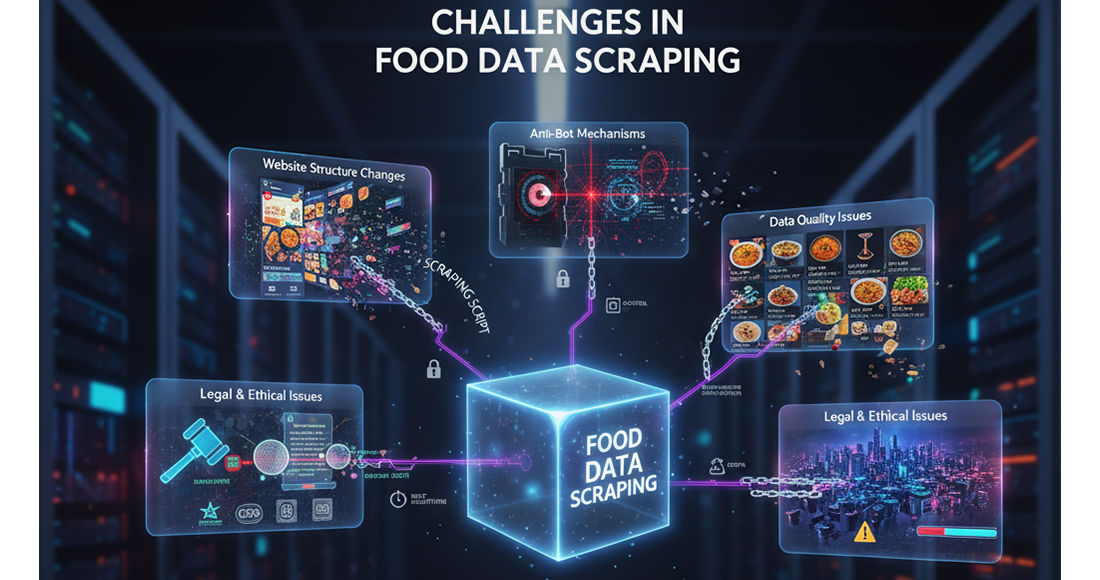
While the benefits are immense, scraping isn’t without obstacles:
- Website Structure Changes: Interface changes on platforms can disrupt scraping scripts.
- Anti-Bot Mechanisms: CAPTCHA, IP blocks, and rate-limiting deter large-scale scrapers.
- Data Quality Issues: Raw data commonly comes with some inconsistencies or duplicates, if not with irrelevant data fields.
- Legal & Ethical Issues: Companies must comply with terms of service and related privacy-legalese, such as GDPR or CCPA.
- Scalability: Handling millions of records across cities warrants big infrastructure.
Best Practices for Cloud Kitchen Data Scraping
- Define a Clear Scope
Be precise about what data you need: prices, menus, reviews, or delivery metrics. - Automate Updates
Schedule scraping to run daily, weekly, or real-time, depending on use case. - Clean and Structure Data
Apply deduplication and standardization for easy integration with analytics tools. - Ensure Compliance
Work with vendors who follow ethical scraping practices aligned with laws. - Integrate with BI Tools
Connect cleaned datasets with Power BI, Tableau, or internal dashboards for real-time insights. - Outsource to Experts
Partner with vendors specializing in large-scale food industry scraping to save time and costs.
Scaling Cloud Kitchens with Data Scraping
Data scraping doesn’t just support existing operations—it enables scalable growth.
- Launch new brands faster by analyzing gaps in local demand.
- Expand geographically by understanding regional cuisines.
- Create dynamic pricing models that adjust based on real-time competitor benchmarks.
- Innovate with seasonal or festival-specific menus guided by demand forecasting.
- Enhance marketing with promotions that directly counter competitor strategies.
For cloud kitchens aiming to dominate their regions, scaling without data scraping is like flying blind.
Future of Cloud Kitchens with AI + Data Scraping
The next decade will see AI-driven personalization in food delivery. Scraping combined with AI can help:
- Predict customer preferences and suggest dishes dynamically.
- Automate menu engineering based on trending cuisines.
- Forecast demand more accurately with predictive analytics.
- Optimize delivery networks using competitor benchmarks.
Cloud kitchens that adopt AI + food data scraping early will set themselves apart as leaders in innovation.
Conclusion: The Role of Food Data Scraping in Cloud Kitchen Success
Albeit great food would be one limelight, a cloud kitchen would be set up through the necessity of systemization, market knowledge, and constant creativity. Long-term success will depend on competitor pricing, customer reviews, delivery specifications, and trending menus in the marketplace.
Food data scraping technology empowers cloud kitchens to:
- Stay competitive with real-time pricing intelligence.
- Innovate menus based on actual demand gaps.
- Optimize operations for faster, more cost-efficient deliveries.
- Plan regional expansion with confidence.
In today’s digital-first food economy, Food Data Scraping isn’t just a tool—it’s a growth engine for cloud kitchens looking to thrive in a crowded market.
Leave feedback about this