

Introduction
Restaurant roped into the realm of food delivery! While several such platforms have been used to great effect, market restaurants, among which are Talabat, Zomato, and Deliveroo, the genuine value really lies in candidates’ profiles.
These reviews are far from mere star ratings or casual comments—a treasure trove of data. They measure customer satisfaction, notice aggravators, and track changes in food preferences. Systematically collecting and analyzing the reviews can help the restaurant in developing areas from menu changes to service enhancements, competitive benchmarking, and customer loyalty programs.
The challenge here is that reviews are scattered throughout thousands of restaurant profiles on different platforms. Manual tracking is impossible at scale. Web scraping is the solution to that one. By automating the collection of restaurant review data from platforms like Talabat, Deliveroo, and Zomato, businesses can build structured datasets for sentiment analysis, quality benchmarking, and growth strategies.
In this blog, we’ll explore:
- Why restaurant reviews matter.
- What insights can be extracted from reviews?
- How to scrape reviews from delivery apps like Talabat, Deliveroo, and Zomato.
- Key use cases for restaurants, cloud kitchens, and FMCG brands.
- Challenges and best practices.
- Why Food Data Scraping is essential for growth in today’s digital-first restaurant economy.
Why Restaurant Reviews Matter
Reviews are today considered the new word-of-mouth. Statistics indicate that over 90% of diners read customer reviews before they make their decision on which restaurant to eat at. For delivery-first brands, reviews not only affect reputation but also visibility on aggregator platforms.
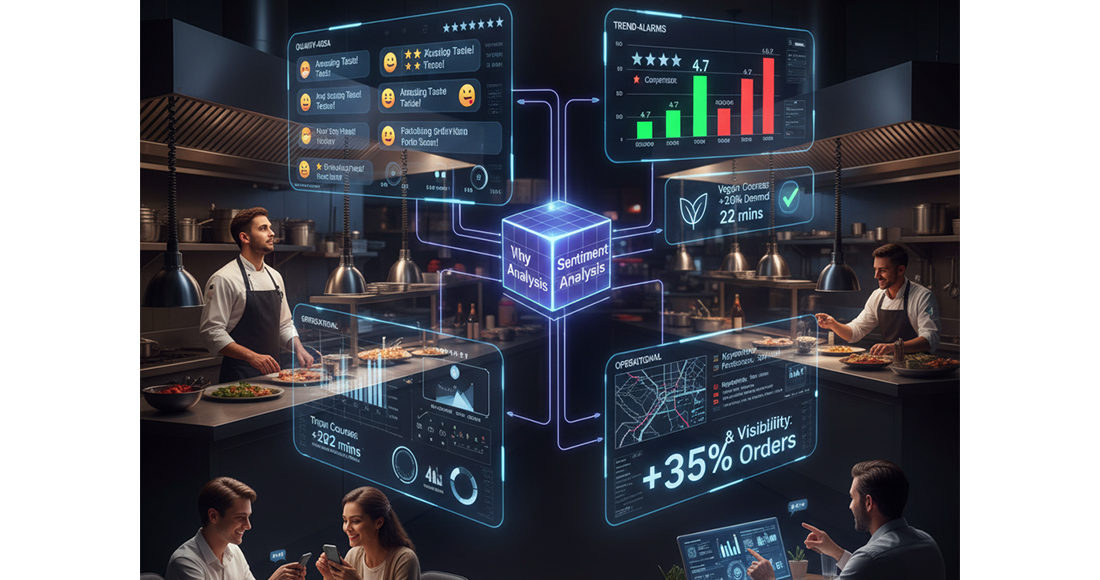
Reviews provide:
- Consumer Sentiment: Dishes, packaging, and service that are liked or disliked by the people.
- Quality-Area: Performance in comparison to other competitors.
- Trend-Alarms: Emerge food trends (for example, demand for vegan courses).
- Operational: Delivery time, attitude, and consistency of the staff.
- Trust: Higher-ranking restaurants rank higher and get more orders.
For businesses, reviews are strategic assets—but only if collected, cleaned, and analyzed at scale.
What Insights Can Be Extracted from Reviews?
Scraping reviews from Talabat, Deliveroo, and Zomato reveals insights across multiple dimensions:
1. Ratings Analysis
- Average star ratings per restaurant.
- Ratings by cuisine, category, or location.
2. Sentiment Analysis
- Positive keywords (e.g., “delicious,” “fast delivery”).
- Negative keywords (e.g., “cold food,” “small portions”).
- Neutral reviews reflecting expectations vs. reality.
3. Dish-Level Insights
- Which dishes receive the most praise.
- Complaints tied to specific menu items.
4. Packaging & Delivery Feedback
- Mentions of packaging quality, leakage, eco-friendliness.
- Delivery time satisfaction.
5. Customer Experience Trends
- Recurring complaints across locations (e.g., inconsistent portion sizes).
- Seasonal reviews tied to festivals or special promotions.
6. Competitor Benchmarking
- Compare your reviews with top competitors in the same category.
How to Scrape Reviews from Food Delivery Apps
Scraping reviews requires automation tools, APIs, and structured workflows. Let’s break it down:
Step 1: Define Objectives
- Do you want all reviews for your restaurant, or competitor reviews too?
- Are you analyzing sentiment, dish-level data, or delivery feedback?
Step 2: Identify Data Points
From Talabat, Deliveroo, and Zomato, key data fields include:
- Review text.
- Star rating.
- Reviewer profile (if available).
- Date of review.
- Restaurant name.
- Dish mentioned (if specified).
Step 3: Use APIs or Custom Scrapers
- APIs: Zomato provides structured API access for reviews. Deliveroo and Talabat may have limited or unofficial APIs.
- Custom Scrapers: Python libraries like BeautifulSoup, Scrapy, or Selenium can automate extraction.
Example in Python (pseudo-code):
import requests
from bs4 import BeautifulSoup
url = “https://www.zomato.com/api/v2.1/reviews?res_id=12345”
headers = {“user-key”: “your_api_key”}
response = requests.get(url, headers=headers)
data = response.json()
for review in data[‘user_reviews’]:
print(review[‘review’][‘rating’], review[‘review’][‘review_text’])
Step 4: Store the Data
- Save reviews in databases like MySQL, MongoDB, or cloud storage.
- Structure fields for easy querying.
Step 5: Clean & Process
- Remove duplicates.
- Standardize text for sentiment analysis.
- Tag keywords for thematic analysis.
Step 6: Analyze
- Use NLP libraries (NLTK, spaCy, TextBlob) for sentiment scoring.
- Build dashboards in Tableau or Power BI for visualization.
Use Cases of Review Scraping
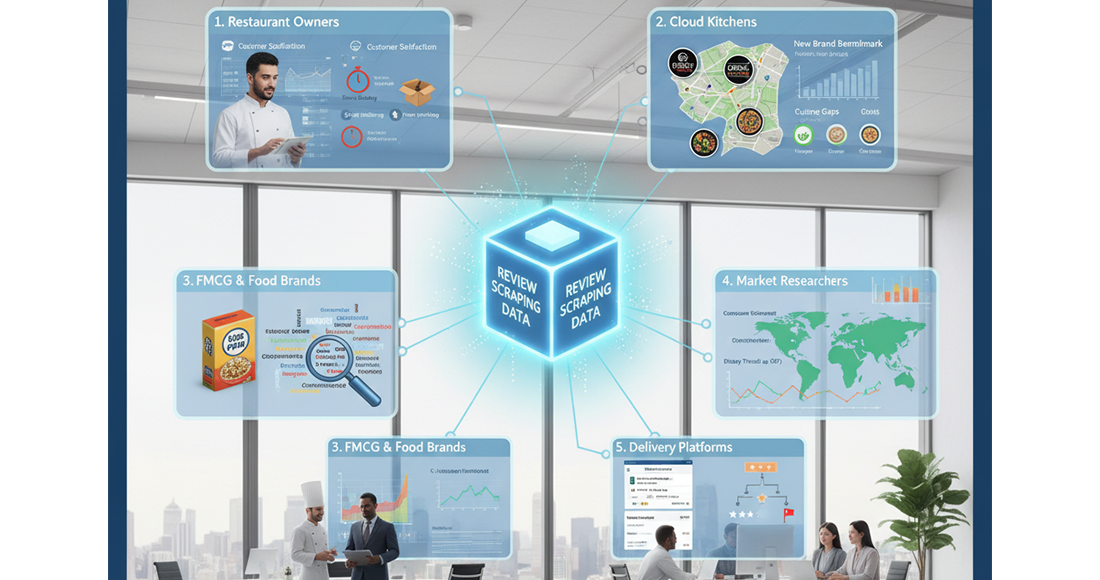
1. Restaurant Owners
- Track customer satisfaction in real time.
- Identify operational issues (slow delivery, poor packaging).
- Improve underperforming dishes based on complaints.
2. Cloud Kitchens
- Benchmark new virtual brands against competitors.
- Spot gaps in cuisine offerings based on customer demand.
3. FMCG & Food Brands
- Understand consumer perception of packaged items sold via restaurants.
- Monitor brand mentions in reviews.
4. Market Researchers
- Map consumer sentiment across cuisines, cities, or demographics.
- Forecast demand for dietary trends (vegan, gluten-free).
5. Delivery Platforms
- Improve restaurant ranking algorithms using sentiment signals.
- Flag low-performing partners for intervention.
Benefits of Review Scraping
- Unbiased Customer Feedback
Reviews reflect authentic consumer voices. - Actionable Intelligence
Businesses can directly address recurring issues. - Competitive Benchmarking
Stay ahead by analyzing rivals’ strengths and weaknesses. - Trend Identification
Capture shifts in demand early (e.g., plant-based diets). - Improved Customer Retention
Addressing negative reviews proactively boosts loyalty.
Challenges in Review Scraping
- Barriers on Platforms: CAPTCHA, rate limiting, and IP blocking.
- Unstructured Data: Reviews are free text, requiring NLP for analysis.
- Language Diversity: Scoring sentiments for multilingual reviews is complicated.
- Scalability Issues: Millions of reviews require a robust infrastructure.
- Compliance Concerns: The scraping has to respect the platform’s terms and privacy laws.
Best Practices for Review Scraping
- Focus on Scope
Don’t scrape everything; target relevant restaurants or cuisines. - Use Proxies & Rotating IPs
Avoid detection and blocking. - Apply Sentiment Analysis Tools
Turn unstructured reviews into structured insights. - Ensure Compliance
Adhere to local regulations like GDPR and platform rules. - Automate Regular Updates
Scrape reviews weekly or monthly for continuous monitoring. - Visualize Insights
Use dashboards for real-time tracking of sentiment and ratings.
Future of Review Scraping in the Food Industry
The next evolution of review scraping will combine with AI and predictive analytics:
- AI Sentiment Analysis: Deeper understanding of emotions in reviews.
- Predictive Customer Insights: Forecasting customer churn risks.
- Dynamic Menu Optimization: Automating menu changes based on review trends.
- Personalization: Using review insights to recommend dishes to specific customer segments.
As delivery apps grow, the role of review scraping will become even more central to restaurant growth.
Scaling Businesses with Review Data
For single restaurants, scraping reviews helps improve service. For chains, it’s a tool for standardizing quality across multiple outlets. For FMCG brands, it reveals regional demand patterns. And for investors, it highlights emerging cuisine trends before they hit the mainstream.
Review data is not just operational—it’s strategic intelligence.
Conclusion: Why Food Data Scraping Matters
Establishing reviews as invaluable sources of consumer insight, they allow storage of pertinent data of a restaurant in an ever-delivery-driven ecosystem for food. Scraping reviews from Talabat, Deliveroo, and Zomato would provide:
- Real-time visibility into customer satisfaction.
- Competitive benchmarking for smarter decisions.
- Actionable intelligence for menu optimization and promotions.
- Market insights for regional expansion and trend identification.
At the foundation of this is Food Data Scraping—the process of turning scattered, unstructured reviews into structured intelligence. For restaurants, brands, and analysts, food data scraping isn’t just a technical advantage—it’s the pathway to smarter growth in the digital-first dining economy.
Leave feedback about this