

Introduction
Swiggy has made a mark in the fast-growing food delivery market in India. As the app operates in more than 115 cities and serves millions of people on a daily basis, it has moved beyond being just a delivery app. It is a data ecosystem that collects into its database real-time information on establishments’ offerings, prices, promotions, and customer preferences.
For restaurateurs and fast-moving consumer goods (FMCG) brands, data scientists and analysts-Swiggy is an intelligence gold mine, which can be accessed by using Swiggy’s API. There are also specific ad hoc custom data scraping solutions that can be built by companies. New Dark Data techniques suggest that the data is a kind of unstructured database, which can only be obtained using an XML Template.
-The API contains a great wealth of information established for new businesses, research in general, and analysts. An effective strategy could be conceived by navigating through this data to customers and businesses interested in knowing their own strengths and weaknesses, the opportunities provided by competitive strategies, and the ever-changing needs of customers.
This blog explores:
- Why Swiggy data is valuable.
- What the Swiggy API offers.
- How to extract and analyze data.
- Use cases across industries.
- Benefits, challenges, and best practices.
- Why Food Data Scraping is the backbone of modern restaurant and delivery intelligence.
Why Swiggy Data Matters
Swiggy works across one of the most arduously contested markets in the world: food delivery operations. Each single order, discount, or review on the platform contributes to defining consumer choices as they evolve in a particular market.
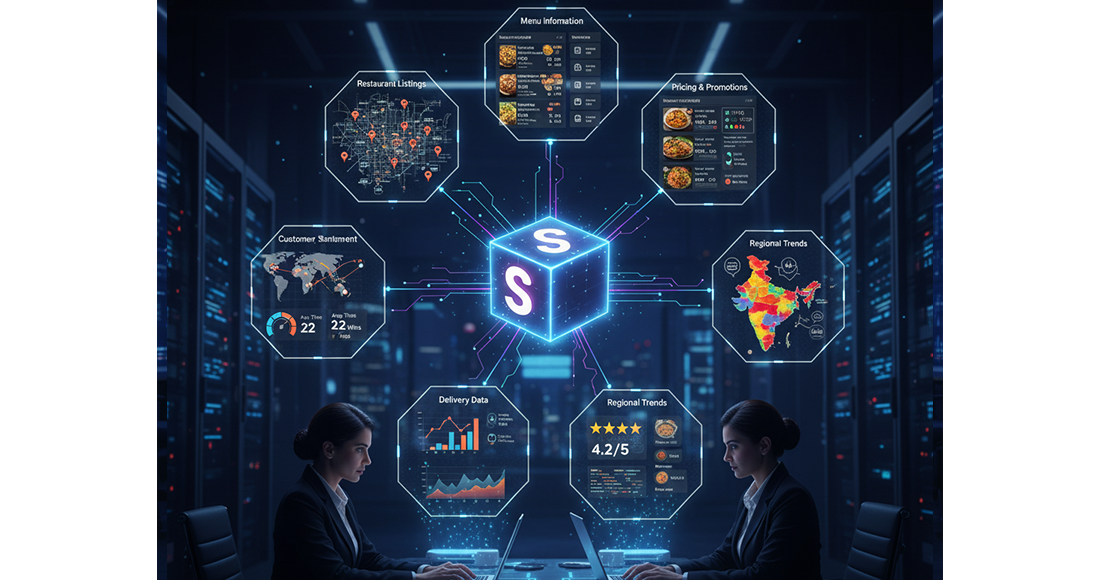
Key Insights from Swiggy Data:
- Restaurant Listings – Who’s listed, where, and how they’re ranked.
- Menu Information – Dishes, categories, prices, and add-ons.
- Pricing & Promotions – Discounts, surge pricing, and seasonal deals.
- Delivery Data – Fees, average times, and radius coverage.
- Customer Sentiment – Ratings and reviews across restaurants.
- Regional Trends – Local cuisines, demand patterns, and popular categories.
This data is invaluable for competitive benchmarking, pricing optimization, and consumer insights.
What Is the Swiggy API?
A structured communication among various systems is allowed with the API. The API at Swiggy lets businesses and developers take structured data regarding food delivery services and restaurants programmatically.
Features of the Swiggy API:
- Restaurant Data: Name, ID, cuisine type, location, ratings.
- Menu Data: Dish names, prices, add-ons, categories.
- Promotions: Discounts, combos, cashback offers.
- Delivery Insights: Fees, surge pricing, and time estimates.
- Review Data: Ratings and customer comments.
However, in the event retail ordering software or official API production access to such resources is constrained or completely not obtainable, enterprises often use arbitration to develop custom extraction units that can harvest constituents at scale within compliance restrictions, with respect particularly to Swiggy.
How to Extract Data Using the Swiggy API
Step 1: API Access or Custom Setup
- Register for Swiggy developer access if available.
- Build custom scraping APIs with Python tools like Scrapy, Selenium, or BeautifulSoup.
Step 2: Define Objectives
Identify whether you need pricing data, menus, promotions, or reviews.
Step 3: API Requests
Use tools like Postman or Python scripts.
Example in Python (pseudo-code):
import requests
url = “https://api.swiggy.com/v1/restaurants?location=Bangalore”
headers = {“Authorization”: “Bearer YOUR_API_KEY”}
response = requests.get(url, headers=headers)
data = response.json()
for restaurant in data[‘restaurants’]:
print(restaurant[‘name’], restaurant[‘cuisine’], restaurant[‘avgRating’])
Step 4: Store Data
Use databases such as PostgreSQL, MySQL, or MongoDB for large-scale storage.
Step 5: Normalize Data
- Standardize menu categories.
- Remove duplicates.
- Align currencies and units.
Step 6: Analyze & Visualize
- Use BI tools like Tableau or Power BI.
- Perform NLP-based sentiment analysis on reviews.
- Benchmark competitor prices and promotions.
Insights from Swiggy API Data
- Menu Price Intelligence
- Compare dish-level prices across competitors.
- Promotion Benchmarking
- Track discounts and loyalty rewards.
- Customer Reviews & Sentiment
- Identify recurring pain points or popular dishes.
- Delivery Insights
- Benchmark delivery fees and time estimates.
- Regional Demand Analysis
- Discover cuisines trending in specific neighborhoods.
Use Cases of Swiggy Data Extraction
1. Restaurants & Cloud Kitchens
- Benchmark pricing against competitors.
- Optimize menus with demand-driven insights.
- Track reviews to improve customer experiences.
2. FMCG & Packaged Food Brands
- Monitor SKU performance on Swiggy.
- Compare competitor promotions.
- Assess regional sales visibility.
3. Delivery Platforms
- Enhance ranking algorithms using restaurant performance data.
- Identify high-performing partners for promotions.
4. Market Researchers
- Forecast cuisine and menu trends.
- Map demand patterns during festivals or seasons.
5. Investors & Analysts
- Assess restaurant performance and growth potential.
Benefits of Swiggy API & Data Scraping
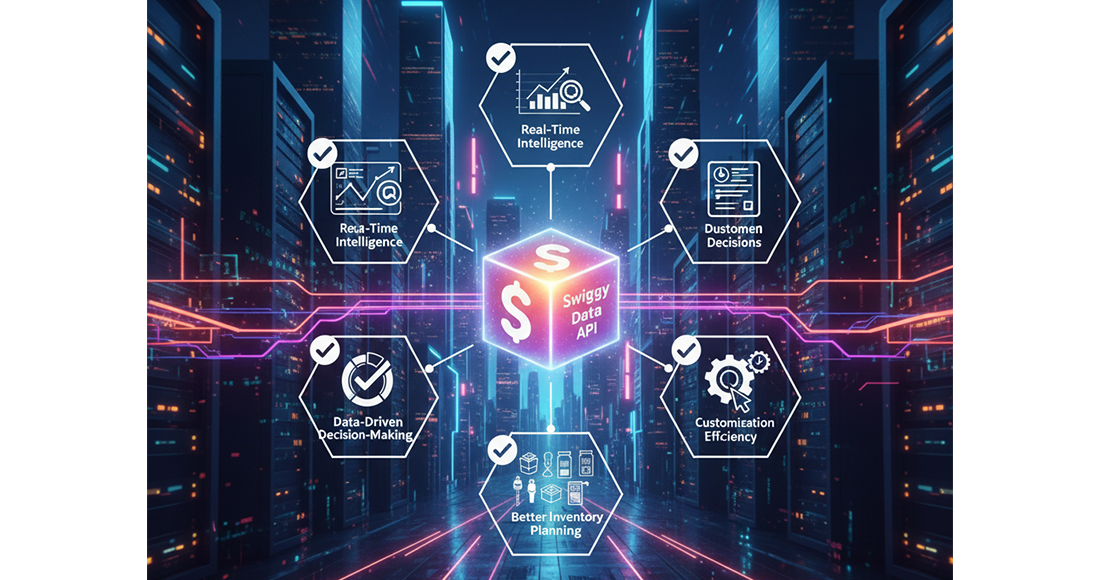
- Real-Time Market Intelligence
Monitor competitor moves instantly. - Data-Driven Decisions
Base pricing, promotions, and menus on evidence. - Efficiency
Automate data collection at scale. - Customization
Extract the exact fields that matter most. - Scalability
Track thousands of restaurants across multiple cities.
Challenges in Swiggy Data Scraping
- Dynamic Menus: Developments necessitate that the individual keep an eye out all the time.
- Antifraud Measures: CAPTCHA, mechanisms for bot detection, and preventing IP blocking.
- Data Normalization: Assembling similar categories and names for use.
- Throttling Limits: APIs can limit the number of uploads or data pulls each day.
- Compliance: Must ensure the regulations of Swiggy in terms of data and governance.
Best Practices for Swiggy Data Extraction
- Define Scope Clearly
Avoid unnecessary scraping to save resources. - Automate Updates
Schedule scraping daily or hourly. - Normalize Data
Standardize categories and prices for comparison. - Use Proxy Infrastructure
Minimize detection risks. - Ensure Compliance
Follow terms of service and legal guidelines. - Visualize Insights
Use dashboards to make data actionable. - Leverage Professional Vendors
Work with experienced scraping partners for large-scale needs.
The Future of Swiggy Data Intelligence
By 2025 and beyond, Swiggy API data will integrate with AI and predictive analytics to unlock:
- Dynamic Pricing Engines: Real-time menu adjustments.
- Predictive Demand Forecasting: Anticipating cuisine spikes during events.
- Hyperlocal Promotions: Personalized offers by neighborhood.
- Operational Optimization: Aligning delivery resources with demand.
The future of food delivery insights lies in automation, AI, and advanced scraping techniques.
Scaling Businesses with Swiggy Data
An edge in pricing and menu design is granted by Swiggy data scraping for single restaurants. It allows scalability with consistent quality when it comes to cloud kitchens. It gives FMCG brands visibility up to the SKU level and lets investors know more about the market trajectory.
Across all levels, Swiggy API data is a game-changer for smarter growth.
Conclusion: The Role of Food Data Scraping
Swiggy is not just a convenience milestone in terms of meals but for businesses it rather is a life-straightening ecosystem of live data. What companies will do with the Swiggy API:
- Track competitor pricing and promotions.
- Optimize menus with real-time insights.
- Improve customer experiences through review analysis.
- Plan expansions based on regional demand.
At the core of food service restaurants, brands, analysts, and investors have taken out of food data scraping—a powerful method wherein precious raw online food delivery data is translated into meaningful business intelligence. Food data scraping is not only a technical instrument for restaurateurs, brands, analysts, and investors; it is the basis of growth, innovation, and competitive advantage in today’s fast-growing sector of food delivery.
Leave feedback about this