

Introduction
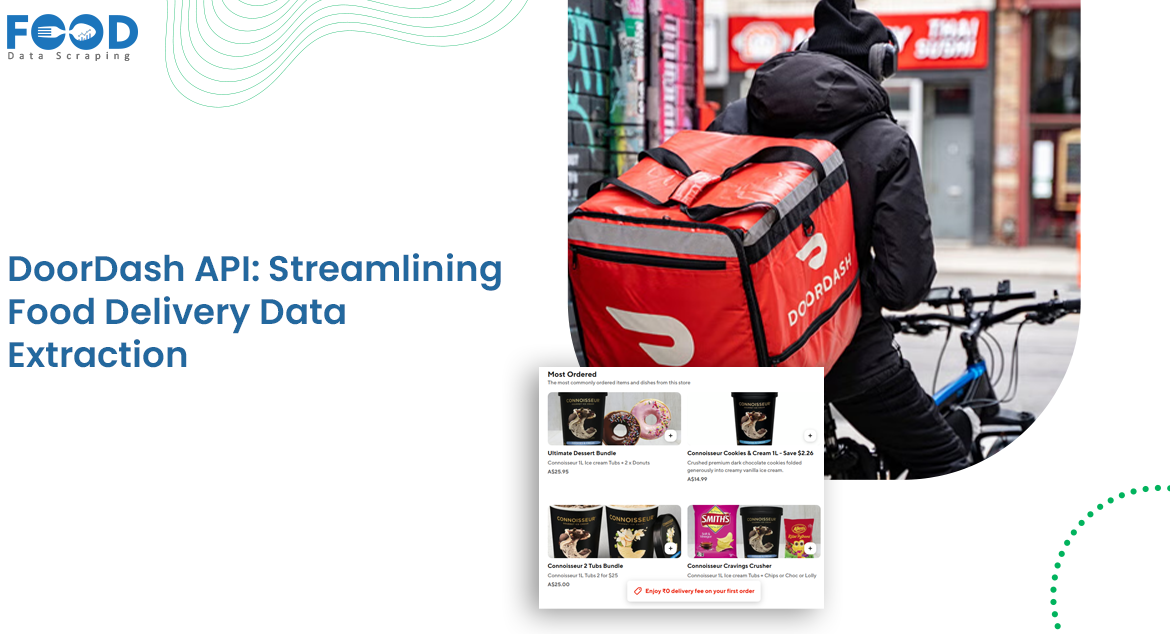
The food delivery market is proliferating globally, but DoorDash holds sway over the transformation. Linking customers and restaurants, grocery stores, and convenience shops in the United States, Canada, and Australia, DoorDash undertakes at least a hundred miles, day in and day out. Yet, what really counts for business isn’t just the food. DoorDash delivers data, and that is very important.
DoorDash is like a walking blockchain that records what goes on in its users. Starting from restaurant menus and product-level pricing, to promotion, delivery fee, or availability of reviews from customers, DoorDash is data-rich. Being key for restaurants, FMCG brands, delivery platforms, and even researchers, this data point could lead to consumer preference insights, competitive dynamics, or market opportunities.
The best way to collect this data is through the DoorDash API, as well as through custom scraping solutions using that technology. An API is the interface needed to automate data acquisition, streamline integration, and yield real-time intelligence that could not have otherwise been collected manually.
This blog will explore:
- Why DoorDash data matters.
- What the DoorDash API offers.
- How to extract and analyze food delivery data.
- Key use cases for restaurants, brands, and analysts.
- Benefits, Challenges, and Best Practices.
- Why Food Data Scraping Is at the Heart of Growth in the Food Delivery Economy.
Why DoorDash Data Matters
There’s a piece of news on the business front that will leave you taken aback: DoorDash, the nation’s most popular food delivery platform, now dominates every 60% of some other US areas. This is the group that would help reveal the real-time mood of consumers and market movements.
Since they are connected to a large base of people, it provide an opportunity to understand prevailing real-time consumption specifics and market activity.
Key Insights DoorDash Data Provides:
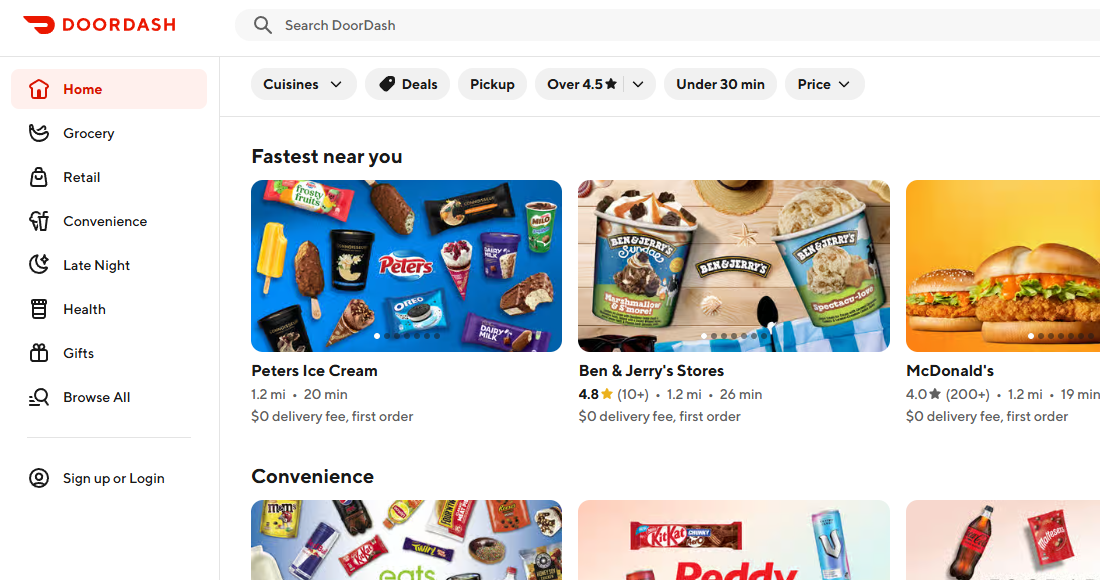
1 .Restaurant Listings
- Restaurant names, categories, cuisines, and ratings.
2. Menu Data
- Dish names, descriptions, portion sizes, and prices.
3. Promotions
- Discounts, combo deals, and seasonal campaigns.
- Delivery Metrics
- Fees, surge pricing, and estimated times.
- Customer Reviews
- Star ratings and sentiment analysis from feedback.
- Regional Trends
- Popular cuisines, dishes, and ordering patterns by location.
This wealth of data makes DoorDash not only a delivery service but also a strategic intelligence platform for businesses across the food ecosystem.
What Is the DoorDash API?
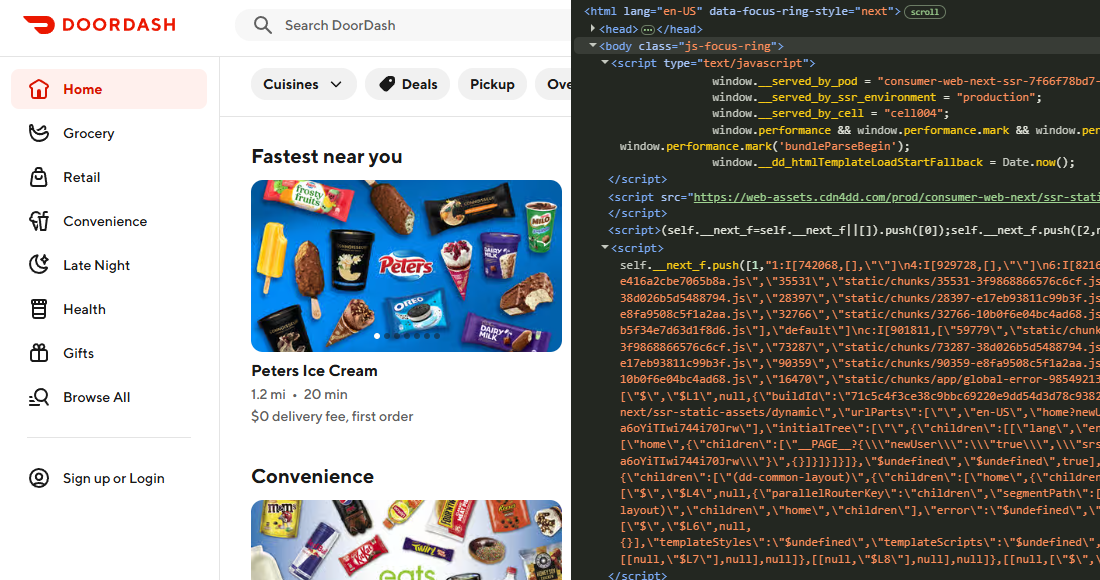
An application programming interface facilitates structured communication between programs. The API of DoorDash offers a platform for businesses and app developers to access restaurant, menu, order, and analysis data programmatically in integration mode.
Features of the DoorDash API:
- Restaurant Data Access – Listings, cuisines, ratings, delivery zones.
- Menu Data Extraction – Item details, pricing, categories, add-ons.
- Promotions – Discounts, seasonal offers, loyalty programs.
- Order Data (Partners) – Integrated access to real-time order feeds.
- Delivery Estimates – Time, fees, and surge signals.
When official APIs are unavailable or restricted, businesses often use custom scraping APIs to gather the same data while maintaining compliance and scalability.
How to Extract Data Using the DoorDash API
Step 1: Obtain API Access
- Register as a DoorDash partner or developer.
- Obtain authentication keys.
- For large-scale analysis, build scraping APIs customized for DoorDash.
Step 2: Define Scope
Identify data needs: menus, reviews, promotions, or delivery metrics.
Step 3: Send Requests
Use tools like Postman or Python libraries (requests).
Example in Python (pseudo-code):
import requests
url = “https://api.doordash.com/v2/restaurants?location=SanFrancisco”
headers = {“Authorization”: “Bearer YOUR_API_KEY”}
response = requests.get(url, headers=headers)
data = response.json()
for restaurant in data[‘restaurants’]:
print(restaurant[‘name’], restaurant[‘cuisine’], restaurant[‘rating’])
Step 4: Store Data
Save in databases like MySQL, PostgreSQL, or MongoDB.
Step 5: Normalize & Clean Data
- Standardize categories (e.g., “Pizza” vs. “Italian Pizza”).
- Remove duplicates.
- Align currency and units.
Step 6: Analyze & Visualize
- Use Power BI or Tableau for dashboards.
- Run sentiment analysis on reviews with NLP tools.
- Benchmark competitor pricing and promotions.
Key Insights Extracted from DoorDash Data
- Menu Pricing Trends
- Track dish-level price changes in real time.
- Promotional Campaigns
- Identify discount strategies used by competitors.
- Customer Sentiment
- Monitor reviews to track recurring issues or highlights.
- Regional Demand
- Discover which cuisines dominate in specific neighborhoods.
- Delivery Fees & Wait Times
- Compare operational performance with competitors.
Use Cases of DoorDash API & Data Extraction
1. Restaurants & Cloud Kitchens
- Optimize menu pricing and items.
- Benchmark delivery times and fees.
- Use review sentiment for service improvements.
2. FMCG & Packaged Food Brands
- Track branded SKUs listed on DoorDash menus.
- Compare competitor promotions and product visibility.
3. Delivery Platforms
- Enhance restaurant ranking algorithms.
- Identify top-performing partners for promotions.
4. Market Researchers
- Forecast cuisine and pricing trends by city.
- Map customer preferences and price elasticity.
5. Investors & Analysts
- Assess restaurant performance for investment decisions.
- Evaluate growth opportunities across markets.
Benefits of Using the DoorDash API
- Real-Time Market Awareness
Capture competitor and consumer shifts as they happen. - Scalability
Extract data across thousands of restaurants and cities. - Operational Efficiency
Automate analysis instead of relying on manual research. - Customization
Focus on the exact data points that matter most. - Better Decisions
Create data-driven strategies for pricing, promotions, and menus.
Challenges in DoorDash Data Scraping
- API Rate Limits: Restrictions on daily request volumes.
- Dynamic Menus: Frequent updates make tracking difficult.
- Anti-Scraping Barriers: CAPTCHAs, bot detection, and IP blocking.
- Data Cleaning: Raw outputs require significant normalization.
- Legal & Compliance Issues: Must align with DoorDash’s policies and data laws.
Best Practices for DoorDash Data Extraction
- Set Clear Goals
Only scrape the data that aligns with business objectives. - Automate Updates
Schedule scraping at hourly or daily intervals. - Normalize Data
Standardize naming, units, and categories. - Stay Ethical & Compliant
Follow terms of service and respect customer privacy. - Use Proxies & Rotating IPs
Minimize the risk of detection and blocking. - Leverage Analytics Tools
Transform raw data into actionable insights. - Work with Experts
Partner with data scraping professionals for scalability.
The Future of DoorDash Data Intelligence
By the year 2025 and beyond, DoorDash’s data practices will be significantly influenced by advances in AI and predictive analytics:
- Predictive Demand Models: Anticipate cuisine popularity during festivals.
- Dynamic Pricing Engines: Automate dish pricing based on demand.
- Personalized Offers: Target discounts at hyperlocal levels.
- Operational Optimization: Use delivery data to optimize supply chains.
DoorDash data will move from descriptive to predictive and prescriptive intelligence.
Scaling Businesses with DoorDash Data
DoorDash extracts data as input data for small restaurants. So that they must compete in their horse zones, just as it equalizes operational standardization across outlets for multi-location chains. Here we provide insights at SKU-level promotions and visibility for FMCGs. It is like a means for analysts who flaunt macro-trends about shaping consumer food behavior, this is something.
DoorDash API data extraction facilitates growth across all scales, provided it is used judiciously.
Conclusion: The Essential Role of Food Data Scraping
DoorDash is much more than a mere delivery platform; it is an active data ecosystem that reflects consumer behavior, competitor strategies, and evolving trends in the marketplace. Business use of the data is key to ensuring the competitive lead.
By using the DoorDash API for food delivery data extraction, companies can:
- Benchmark competitors on pricing and promotions.
- Improve customer experience by analyzing reviews.
- Optimize operations with delivery insights.
- Expand strategically with regional demand data.
Food data scraping underlies this opportunity. It entails turning higgledy-piggledy online listings into well-structured insights that can then be used effectively. Food data scraping is not just an accessory for food, but it is a requisite for the smarter growth in the food delivery economy, whether it is for restaurants, FMCG brands, or delivery platforms.
Leave feedback about this